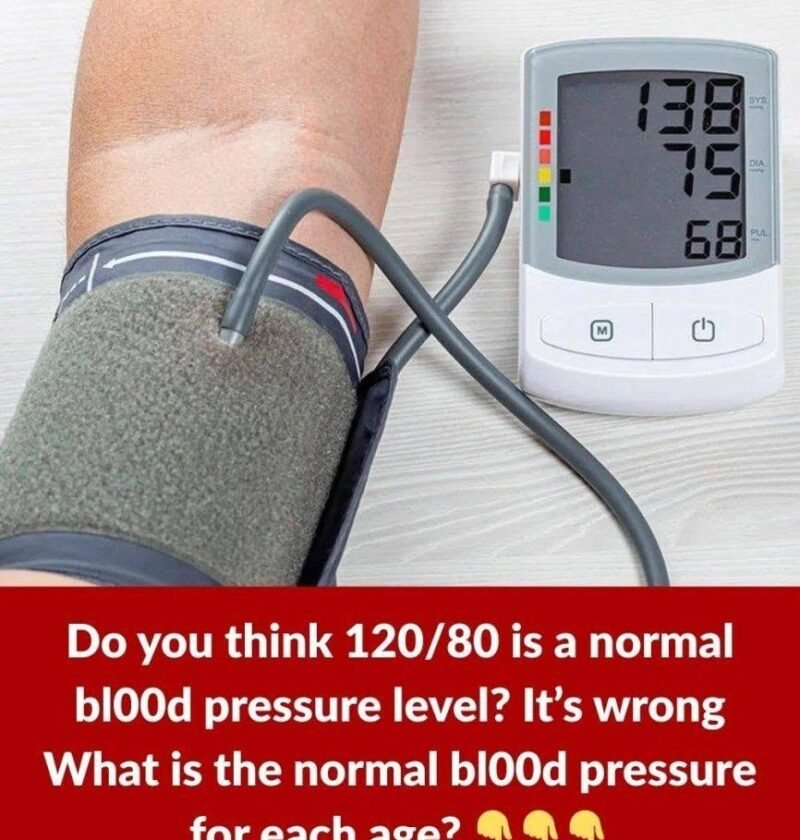
Blood pressure doesn’t have a single “normal” value for each age. In adults, the usual healthy target is broadly similar across ages, while children’s normal blood pressure depends on age, sex, and height.
Adults
| Age | Typical healthy blood pressure |
|---|---|
| 18–39 | Around <120/80 mmHg |
| 40–59 | Around <120/80 mmHg |
| 60+ | Often still <120/80 mmHg, although treatment targets may be individualized |
A reading of 120–129/<80 is consideredelevated under commonly used U.S. guidelines. 130/80 or higher can indicate hypertension, depending on repeated measurements and the guideline being used.
Children & teenagers
For children, the cutoff is more complicated because normal values change with growth. A pediatrician usually compares the child’s blood pressure with standardized age/sex/height percentiles. Teenagers aged 13+ are generally assessed using adult-style thresholds in many guidelines.
Important: One high reading does not necessarily mean someone has high blood pressure. It’s usually confirmed with repeated measurements taken correctly.
If you tell me the person’s age, sex, and blood-pressure reading (for example, “65-year-old male, 145/90”), I can explain what that reading means.