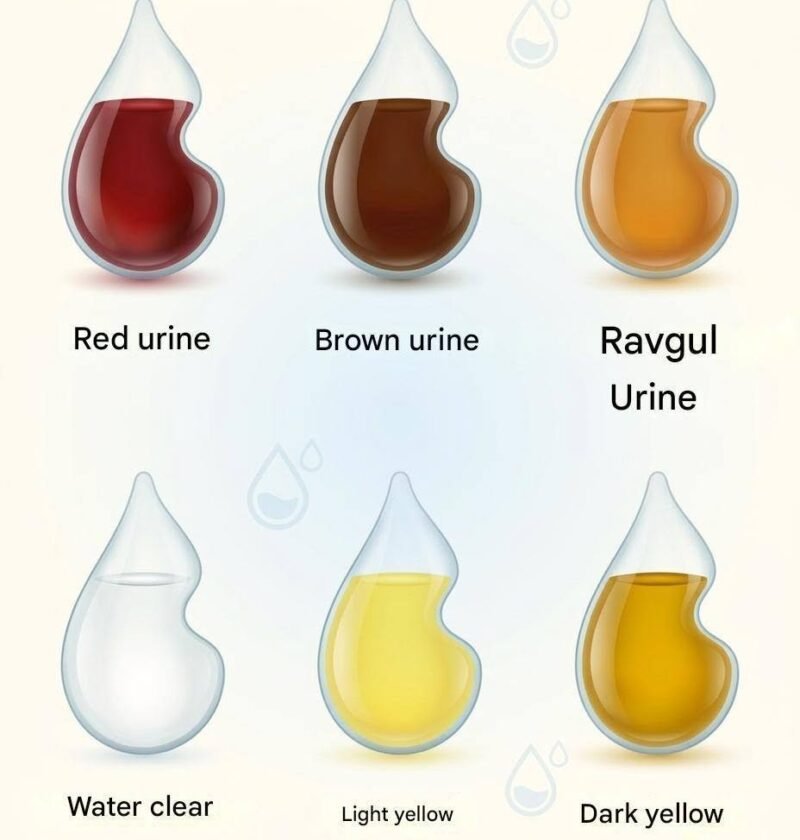
The color of your urine is a helpful, real-time indicator of your hydration levels and overall health. Changes can range from simple dietary effects to signs that require a doctor’s attention.
Urine Color Guide
-
Transparent / Clear: You are likely drinking too much water. While staying hydrated is great, overhydration can sometimes dilute important electrolytes in your body.
-
Pale Yellow / Transparent Yellow: This is the ideal, healthy range. It means you are properly hydrated and your body is in balance.
-
Dark Yellow / Amber: You are mildly dehydrated. Your body is holding onto water to conserve fluids, making your urine more concentrated. Time to drink a glass of water!
-
Honey / Brownish-Amber: This indicates severe dehydration or potentially a liver issue (such as bilirubin buildup). If drinking plenty of water doesn’t quickly lighten your urine, consult a physician.
-
Pink / Red / Reddish-Brown: This can be caused by eating certain foods (like beets, rhubarb, or blackberries), but it can also signal blood in the urine (hematuria). Blood can point to urinary tract infections (UTIs), kidney stones, or more serious conditions. Always have this evaluated if food isn’t the obvious cause.
-
Orange: Often caused by dehydration, certain medications, or vitamin B supplements. However, it can also indicate a problem with your liver or bile ducts.
-
Blue / Green: This is rare and usually harmless, typically caused by certain medications, food dyes, or rare genetic conditions/bacterial infections.
-
Cloudy / Milky: This often points to a UTI, kidney stones, or high levels of certain minerals and proteins.
When to See a Doctor
While temporary changes in urine color are frequently tied to diet, hydration, or vitamins, you should seek medical advice if you notice:
-
Persistent red, brown, or pink urine without a dietary explanation.
-
Urine that has a foul or unusually strong odor accompanied by cloudiness.
-
Pain, burning, or difficulty when urinating, alongside unusual color changes.
Note: Certain common medications (like the antibiotic rifampin or over-the-counter laxatives) can dramatically change urine color. Review any new medications or supplements if you notice a sudden shift.
Are you experiencing any other symptoms along with a change in your urine color?