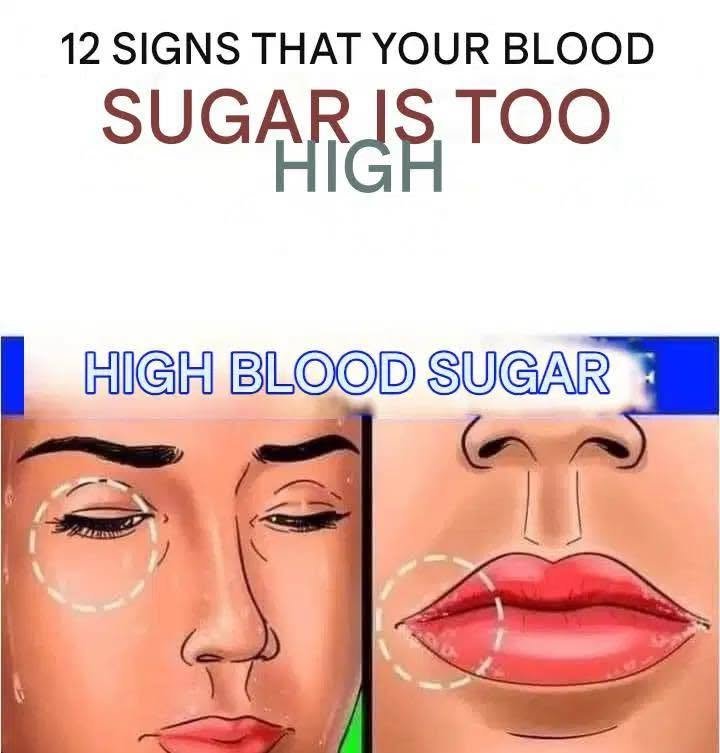
The High-Sugar Alert: 12 Signs Your Blood Glucose May Be Too High
High blood sugar (hyperglycemia) can cause noticeable symptoms, but it can also develop with few or no symptoms, particularly in type 2 diabetes. These signs don’t prove that your blood sugar is high—testing is needed to know for sure.
12 symptoms to watch for
-
Increased thirst — feeling unusually thirsty can occur as the body loses more water through urination.
-
Frequent urination — excess glucose in the blood can increase the amount of urine produced.
-
Dry mouth — fluid loss can contribute to a persistently dry mouth.
-
Increased hunger — diabetes can interfere with the body’s ability to use glucose effectively.
-
Unexplained weight loss — particularly when blood glucose is very high or insulin is insufficient.
-
Unusual fatigue or weakness — high glucose can be accompanied by significant tiredness.
-
Blurred vision — elevated glucose can temporarily affect vision.
-
Headaches — headaches can occur alongside high blood glucose, although they have many other possible causes.
-
Slow-healing cuts or sores — diabetes can impair healing.
-
Frequent infections — recurrent urinary, skin, or yeast infections can be associated with diabetes.
-
Tingling or numbness in the hands or feet — this can occur with diabetes-related nerve damage, particularly after prolonged high blood glucose.
-
Difficulty concentrating or feeling confused — very high blood glucose can affect mental function and can become an emergency when severe