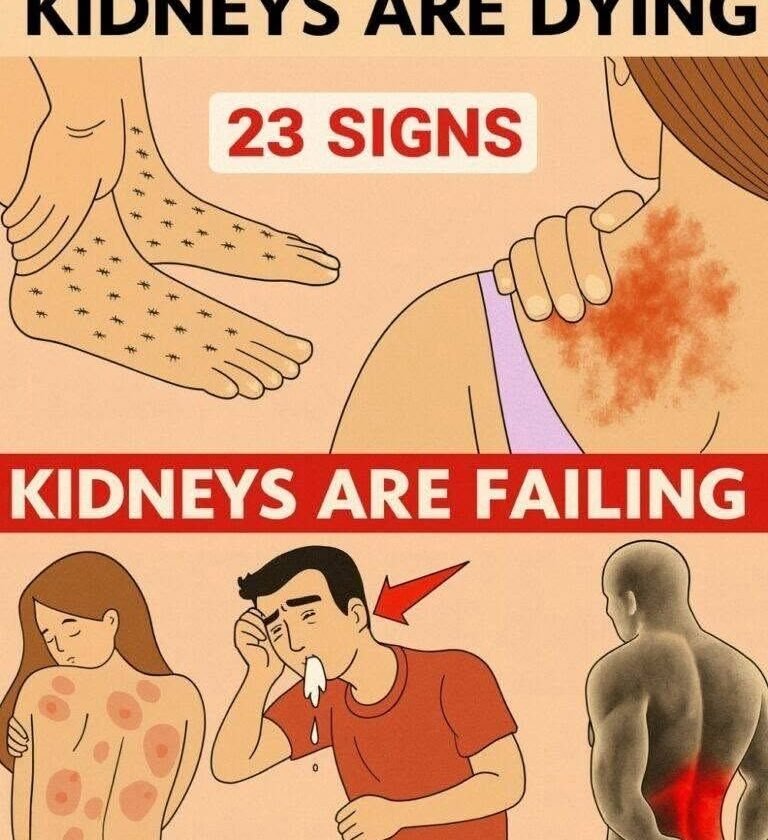
Because chronic kidney disease is often called a “silent killer” in its early stages, it rarely presents with obvious pain until advanced progression. However, your body can send out surprising, lesser-known physical red flags when your renal system struggles to filter waste, manage electrolytes, and balance fluids.
While clickbait headlines love to exaggerate lists of “strange signs,” nephrologists and medical research point to several unusual or unexpected indicators that your kidneys may be under stress:
1. Unusually Foamy or Bubbly Urine
-
What it looks like: The toilet water looks like it has been beaten into a froth, resembling beer foam or whipped egg whites, requiring multiple flushes to clear.
-
Why it happens: This points to proteinuria—a condition where damaged kidney filters (glomeruli) allow large amounts of protein (albumin) to leak out of the blood and into your urine.
2. Persistent, Deep-Seated Itching (Pruritus)
-
What it looks like: All-over skin dryness and an intense, relentless itch that doesn’t improve with moisturizers, lotions, or standard allergy creams.
-
Why it happens: When kidneys fail to filter out waste effectively, phosphorus and other toxins accumulate in the blood (uremia). This mineral imbalance triggers deep chemical irritation in skin nerve endings.
3. A Metallic Taste or Ammonia Breath
-
What it looks like: Food suddenly tastes oddly metallic (especially meat), or people comment that your breath smells faintly like urine or ammonia.
-
Why it happens: A buildup of urea in the bloodstream (uremia) alters your sense of taste, dampens your appetite, and changes how your breath smells.
4. Mysterious Nighttime Muscle Cramps
-
What it looks like: Severe, painful spasms locking up your calves, feet, or toes suddenly while you are trying to sleep.
-
Why it happens: Failing kidneys struggle to balance electrolytes like sodium, calcium, potassium, and magnesium, which directly impairs nerve and muscle signaling.
5. Puffy Eyes in the Morning (Periorbital Edema)
-
What it looks like: Waking up with heavy, swollen bags or puffiness around your eyes that fades slightly as the day goes on.
-
Why it happens: Unlike ankle swelling caused by gravity, swelling around the delicate eye tissue is a classic visual clue that your kidneys are leaking massive amounts of protein into your urine, altering fluid balance.
6. Restless Legs Syndrome (RLS) at Night
-
What it looks like: An uncomfortable, irresistible urge to move your legs while trying to rest, often described as creeping, crawling, or pulling sensations.
-
Why it happens: Toxins building up in the nervous system from reduced kidney function are strongly linked to the onset or worsening of restless legs.
7. A Grayish, Unhealthy Skin Pallor
-
What it looks like: Your skin takes on a dull, pale, or slightly yellowish-gray tone that makes you look constantly washed out.
-
Why it happens: Kidneys produce a vital hormone called erythropoietin (EPO), which tells your bone marrow to make red blood cells. When kidneys decline, you develop anemia (low red blood cells), altering your natural skin coloration.
The Safest Way to Check Your Kidneys
Because many of these strange signs overlap with everyday lifestyle issues or aging, you cannot diagnose kidney trouble by symptoms alone. The only definitive way to evaluate your renal health is through two simple, routine medical tests:
-
A Blood Test (eGFR): Measures serum creatinine to calculate how well your kidneys are filtering waste.
-
A Urinalysis (ACR): Checks specifically for microscopic protein leakage in your urine.
Are you currently experiencing any unusual physical symptoms like unexplained fatigue, skin itching, or swelling that prompted you to look into your kidney health?