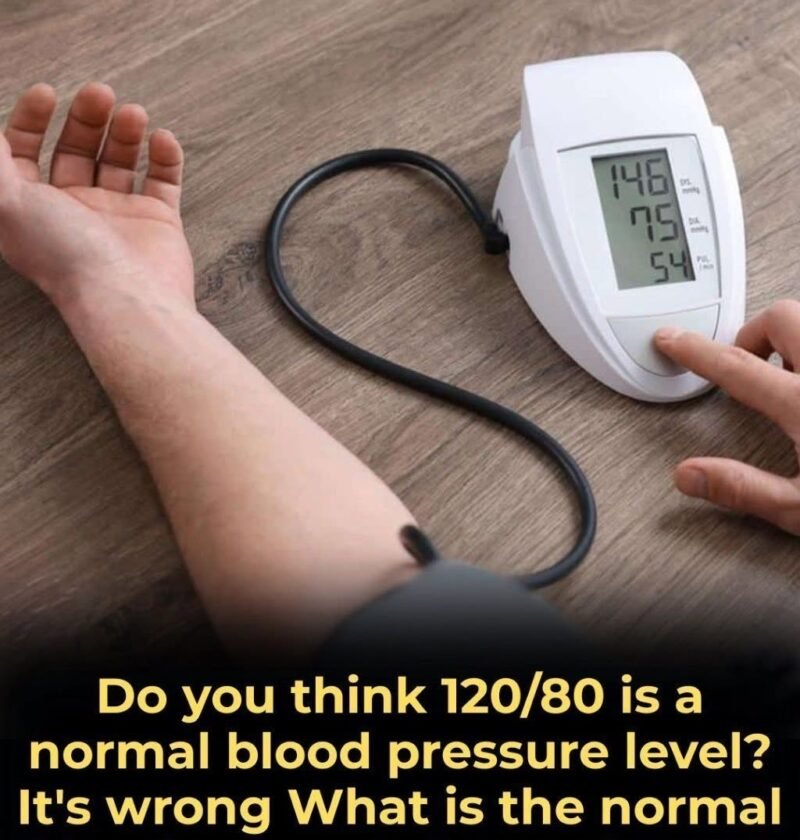
Here’s a detailed, updated version that avoids the common misconception that there is a different “normal” blood-pressure target for every age. Current adult guidelines use the same basic categories across adult age groups, while treatment goals may be individualized. (professional.heart.org)
What Is Normal Blood Pressure for Your Age? A Clear, Updated Guide
Blood pressure naturally changes throughout life, and many people wonder whether a reading that is normal for a 30-year-old is also normal for someone in their 60s or 70s.
The important point is that there isn’t a separate “normal” blood-pressure range for each adult age group. Current American Heart Association/American College of Cardiology guidance defines normal blood pressure in adults as less than 120/80 mm Hg. Age, medical conditions, medications, and overall cardiovascular risk can affect how an individual reading should be interpreted and treated.
Understanding the Two Numbers
A blood-pressure reading contains two numbers:
- Systolic pressure: the top number, representing pressure in the arteries when the heart contracts.
- Diastolic pressure: the bottom number, representing pressure when the heart relaxes between beats.
For example, a reading of 118/76 mm Hg means a systolic pressure of 118 and a diastolic pressure of 76.
Adult Blood Pressure Categories
According to current U.S. guidelines:
| Category | Systolic | Diastolic |
|---|---|---|
| Normal | Less than 120 | Less than 80 |
| Elevated | 120–129 | Less than 80 |
| Stage 1 hypertension | 130–139 | 80–89 |
| Stage 2 hypertension | 140 or higher | 90 or higher |
| Severe hypertension | Higher than 180 | and/or higher than 120 |
If the systolic and diastolic numbers fall into different categories, the higher category is generally used. (www.heart.org)
What About Blood Pressure in Your 20s, 30s, 40s, 50s, 60s, or 70s?
It is tempting to use an age-based chart suggesting that higher blood pressure is automatically “normal” as you get older. However, age alone does not make hypertension normal.
Blood pressure tends to rise with age in populations, particularly systolic pressure. But a higher average reading among older adults is not the same thing as a healthy target. (CDC)
So, for adults:
- 20s–30s: less than 120/80 is considered normal.
- 40s–50s: less than 120/80 remains the normal category.
- 60s–70s: less than 120/80 remains the normal category, although treatment decisions may need to account for other health factors.
- 80s and beyond: blood-pressure goals may need to be individualized by a clinician, particularly when frailty, other illnesses, or medication-related side effects are concerns.
The 2025 AHA/ACC guideline identifies less than 130/80 mm Hg as the overarching treatment goal for adults receiving treatment, while recognizing that some people require individualized considerations. (professional.heart.org)
Is 120/80 Completely Normal?
It is close to the normal range, but technically the current classification defines normal as below 120 systolic and below 80 diastolic.
For example:
- 118/76: normal
- 119/79: normal
- 125/76: elevated
- 132/82: stage 1 hypertension
- 145/92: stage 2 hypertension
One isolated reading does not necessarily establish a diagnosis. Blood pressure can temporarily change because of stress, activity, caffeine, illness, pain, or the measurement environment.
Why Older Adults May Need Individualized Advice
As people age, systolic blood pressure often increases because arteries become less elastic. That does not mean elevated blood pressure should simply be accepted as an unavoidable part of aging.
At the same time, aggressively lowering blood pressure may not be appropriate for every individual. A clinician may consider overall cardiovascular risk, kidney function, other medical conditions, medications, falls or dizziness, frailty, and life expectancy when determining an appropriate treatment plan.
How to Get a More Accurate Reading
A single measurement can be misleading. For home monitoring, the American Heart Association recommends using an appropriate, validated device and measuring under consistent conditions.
Before measuring:
- Sit quietly for about five minutes.
- Keep your back supported and both feet flat on the floor.
- Support your arm at heart level.
- Avoid talking during the measurement.
- Take two readings about one minute apart and record the results.
An u