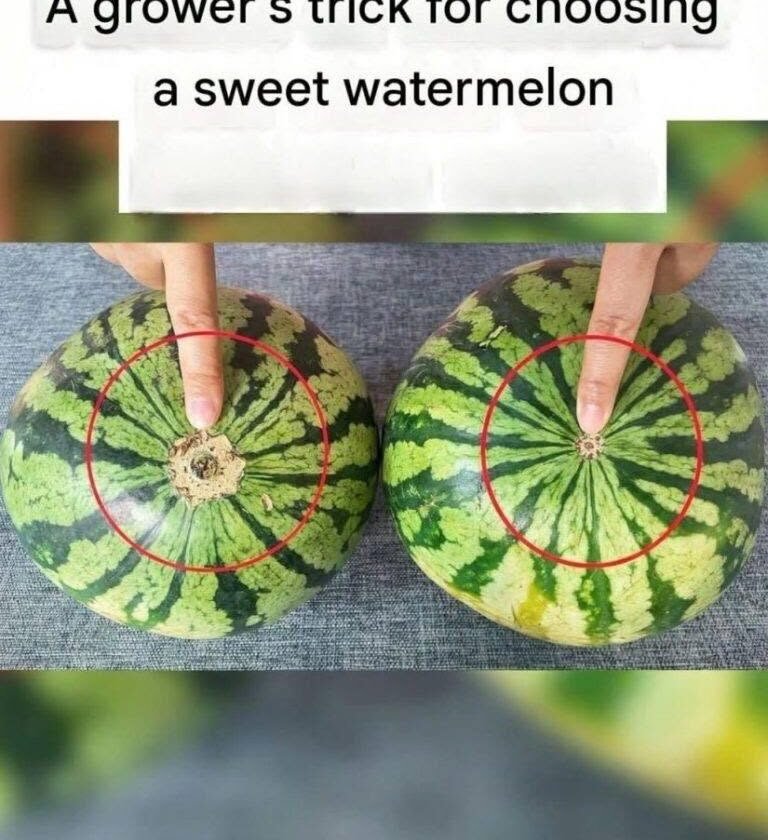
Absolutely. The visual clues can help you choose a ripe, sweet watermelon, although no outside sign can guarantee sweetness.
🍉 How to pick a sweeter watermelon
-
Look for a large creamy-yellow field spot. This is the area where the melon rested on the ground. A deep yellow or creamy-orange spot generally indicates that it ripened longer on the vine. A very pale white spot can indicate less ripeness.
-
Choose a dull, not shiny, rind. A glossy green surface can indicate a less mature melon. A more matte appearance is often a better sign of ripeness.
-
Check the webbing. Brown, rough, web-like markings on the rind are sometimes associated with areas where sugar has accumulated, though this isn’t a guarantee of sweetness.
-
Look for a dry stem. If the stem is brownish and dried rather than fresh green, the melon may have had more time to mature.
-
Pick one that feels heavy for its size. A heavier watermelon generally contains more water and tends to be a good sign of freshness.
-
Don’t rely on the “hollow sound” test alone. Tapping can provide a clue, but it’s subjective and isn’t a reliable guarantee of sweetness.
The easiest rule
If you’re standing at a market with several similar melons, I’d prioritize:
Large creamy-yellow field spot + dry stem + heavy for its size + relatively dull rind.
And don’t worry too much about whether it’s perfectly round or oval—shape alone doesn’t tell you how sweet it will be.