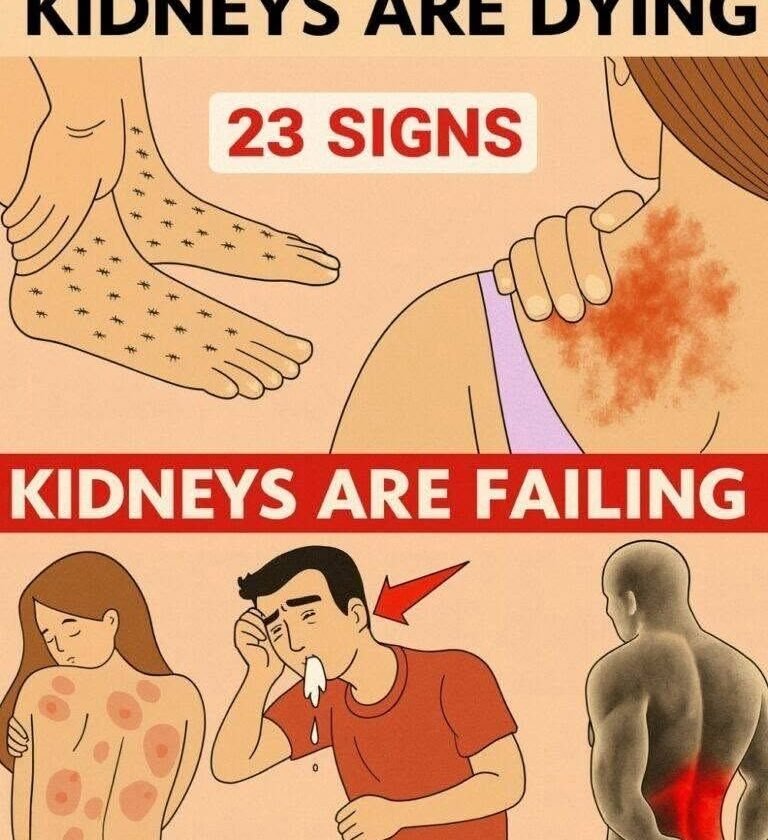
Kidney disease can develop quietly, so some signs are easy to overlook. However, none of these symptoms alone proves that your kidneys are failing—many have other, more common causes.
23 possible warning signs
-
Swelling in the ankles, feet, legs, or around the eyes
-
Foamy or unusually bubbly urine — can indicate protein in the urine.
-
Blood in the urine — pink, red, or cola-colored urine.
-
Urinating much more or less than usual
-
Waking frequently at night to urinate
-
Very dark or unusually cloudy urine
-
Persistent fatigue or weakness
-
Difficulty concentrating or feeling mentally “foggy”
-
Poor appetite
-
Nausea or vomiting
-
Persistent itching without an obvious skin cause
-
Dry or unusually itchy skin
-
Muscle cramps or twitching
-
Muscle weakness
-
Shortness of breath, particularly if fluid is accumulating
-
Puffiness around the eyes, especially in the morning
-
High blood pressure that is difficult to control
-
Headaches, particularly when associated with uncontrolled blood pressure
-
Bad or metallic taste in the mouth
-
Ammonia-like breath or unpleasant taste
-
Unintentional weight loss
-
Flank or back pain — more suggestive of certain kidney problems such as stones or infection than chronic kidney disease.
-
Changes in sleep, including restless sleep or difficulty sleeping
The important part
Early chronic kidney disease often causes no symptoms at all. The most useful way to detect it is through testing—particularly a blood creatinine/eGFR test and a urine albumin test. People with diabetes, high blood pressure, cardiovascular disease, or a family history of kidney disease may need regular screening.
Seek urgent medical attention for very little or no urine, severe shortness of breath, confusion, severe weakness, or blood in the urine with significant pain or illness.
If you tell me which of these symptoms you’re experiencing, I can explain which ones are more specifically associated with kidney problems and what tests are usually used.