Waking Up With a Dry Mouth? Here’s What Your Body Might Be Telling You
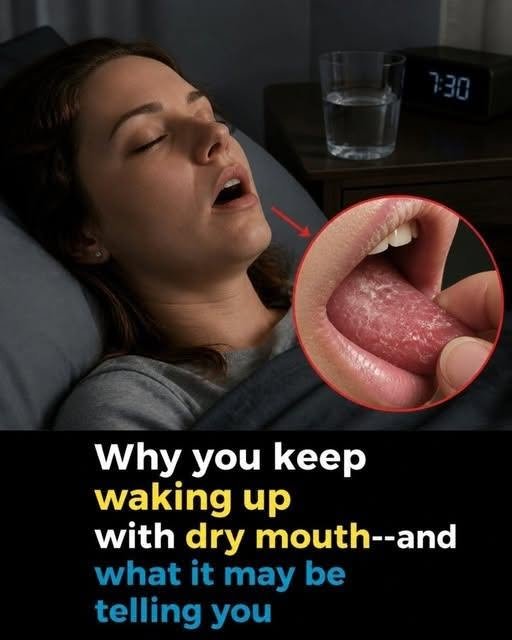
Waking with a dry, sticky mouth is common and doesn’t automatically mean something is wrong. During sleep, saliva production naturally decreases, and breathing through your mouth can make the dryness more noticeable.
Common reasons
-
Mouth breathing — A blocked nose, allergies, or sleeping with your mouth open can dry the mouth.
-
Snoring or sleep apnea — Overnight mouth breathing can cause pronounced morning dryness.
-
Dehydration — Not getting enough fluids during the day can contribute.
-
Medications — Many medicines can reduce saliva, including some antihistamines, antidepressants, decongestants, and blood-pressure medicines.
-
Alcohol and tobacco — Both can worsen dry mouth.
-
Dry bedroom air — Air conditioning or low humidity can contribute.
-
Diabetes — Persistent dry mouth combined with excessive thirst and frequent urination deserves medical evaluation.
-
Reduced saliva production — Salivary-gland disorders and some other medical conditions can cause ongoing dryness.
What may help
-
Drink water regularly during the day.
-
Keep your bedroom comfortably humid if the air is dry.
-
Limit alcohol and avoid tobacco.
-
Maintain good oral hygiene because reduced saliva increases the risk of cavities and gum disease.
-
If you suspect a medication is responsible, don’t stop it on your own—ask your doctor or pharmacist about it.
When to get checked
See a healthcare professional or dentist if the problem is persistent or severe, particularly if you have difficulty swallowing, frequent mouth infections, significant dental problems, or excessive thirst and urination.
If you snore loudly, gasp or choke during sleep, wake frequently, or feel unusually sleepy during the day, mention the dry mouth to your doctor. These can be signs of sleep apnea, which is treatable.