How to Clean Dirty Bed Pillows and Freshen Them Up 🛏️
Pillows collect sweat, skin oils, dust, and saliva over time. Whether you can wash yours depends on the filling and the manufacturer’s care label.
1. Check the care label first
Look for washing and drying instructions. Polyester and many down/feather pillows can often be washed, while memory-foam and latex pillows generally should not be machine-washed.
2. For washable pillows
-
Remove the pillowcase and protective cover.
-
Pre-treat obvious stains with a small amount of mild liquid detergent.
-
Wash according to the label, preferably using a gentle cycle and mild detergent.
-
If the label permits, an extra rinse can help remove detergent residue.
3. Dry them completely
This is especially important. Use the dryer setting recommended on the label, or air-dry thoroughly in a well-ventilated area. A damp pillow can develop mildew and unpleasant odors.
If dryer-safe, periodically pause the cycle and fluff the pillows so the filling dries evenly.
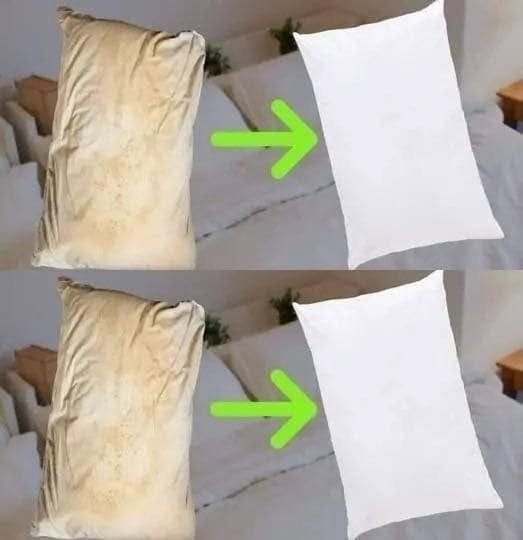
What about making them “white”?
A yellowish pillow isn’t necessarily dirty—it can be discolored by body oils and perspiration. A suitable oxygen-based laundry product may help with some washable fabrics, but check the care instructions first.
Never mix chlorine bleach with vinegar, ammonia, or other cleaning products.
For memory-foam pillows
Don’t put them in the washing machine unless the manufacturer specifically says you can. Instead, spot-clean the cover and surface, following the manufacturer’s instructions, and allow the foam to dry completely.
Finally, use a washable pillow protector underneath your pillowcase. It can greatly reduce the amount of sweat and oil reaching the pillow itself and make future cleaning much easier.