Vinegar for Whiter Whites and Softer Towels: What Actually Works
White vinegar is sometimes recommended as a laundry rinse aid, but it isn’t a magic whitener—and using too much or using it incorrectly can damage fabrics or your washing machine over time.
The right way to use it
-
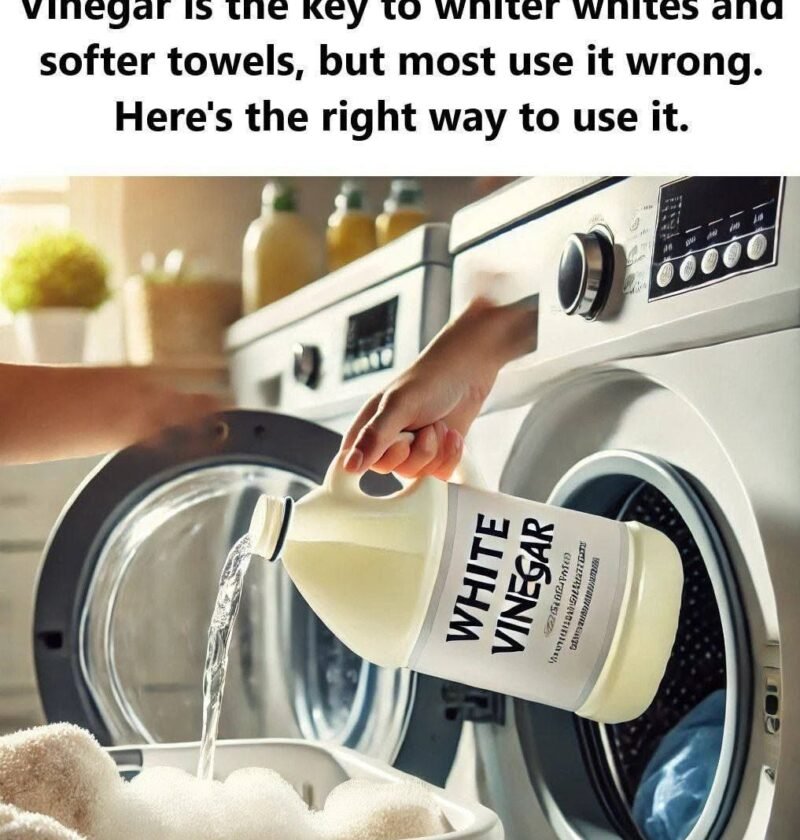
For towels: Add a small amount of distilled white vinegar to the fabric-softener compartment, rather than pouring it directly onto clothing. It can help remove detergent residue and odors, which may make towels feel less stiff.
-
For whites: Vinegar can help with odor and mineral/detergent buildup, but it generally isn’t as effective a whitener as an oxygen-based laundry bleach or a suitable commercial whitening product.
-
Use the normal wash cycle according to the care label on your clothing.
-
Don’t overdo it. More vinegar doesn’t mean cleaner laundry.
⚠️ Never mix vinegar with bleach
This is the most important rule. Vinegar + chlorine bleach can produce dangerous chlorine gas. Never put them together in the same wash or container.
Also avoid using vinegar on delicate fabrics that require special care, and check your washing-machine manufacturer’s recommendations before making it a regular part of your laundry routine.
So the real “trick” isn’t using a huge amount of vinegar—it’s using a modest amount in the rinse/fabric-softener compartment and keeping it completely separate from chlorine bleach.