If you’re using this as a health-content headline, here’s what it generally refers to. Nighttime symptoms can occur with diabetes, but none of these symptoms alone proves that someone has diabetes.
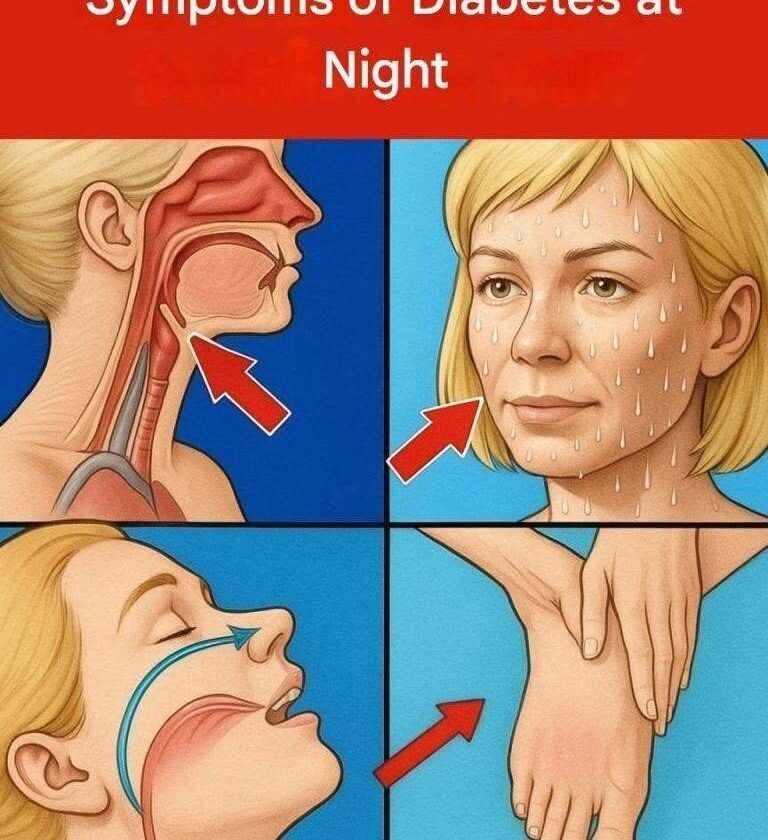
5 Diabetes Symptoms That May Appear at Night
-
Frequent urination — Elevated blood glucose can cause the kidneys to excrete more glucose and water, leading to increased urination and nighttime bathroom trips.
-
Excessive thirst or dry mouth — Losing more fluid through urination can leave you unusually thirsty, including during the night.
-
Night sweats or sweating — In someone taking insulin or certain glucose-lowering medicines, low blood sugar (hypoglycemia) can cause sweating, shakiness, hunger, or a racing heartbeat during sleep.
-
Restless or disrupted sleep — Frequent urination, thirst, sweating, or fluctuations in blood glucose can interfere with sleep.
-
Tingling, burning, or pain in the feet — Diabetes-related nerve damage (peripheral neuropathy) can produce symptoms that become particularly noticeable when you’re resting at night.
Important distinction
Nighttime symptoms aren’t a reliable way to diagnose diabetes. Diabetes is diagnosed with blood-glucose testing, such as an A1C, fasting plasma glucose, or an appropriate glucose tolerance/random glucose test. If someone repeatedly experiences these symptoms—especially excessive thirst and urination, unexplained weight loss, or recurrent infections—it’s worth discussing testing with a healthcare professional.
If you meant this as a YouTube/Facebook health headline, I can also turn it into a detailed, reader-friendly article.