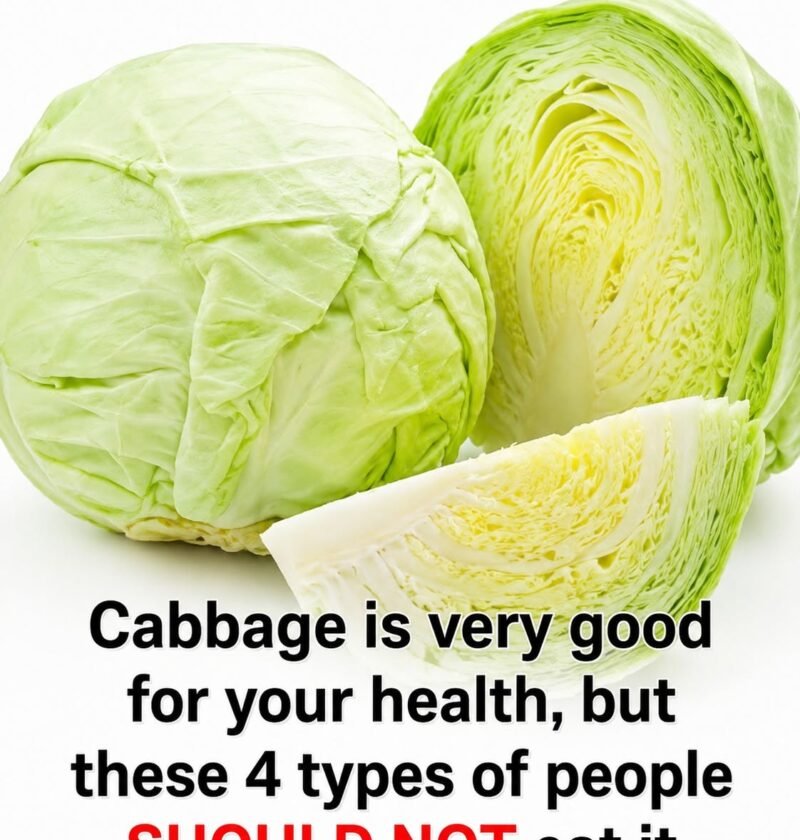
4 types of people who may need to limit cabbage 🥬
Cabbage is nutritious and most people do not need to avoid it. The idea that four specific groups must completely stop eating cabbage is misleading. However, certain people may need to limit it or take precautions.
-
People taking warfarin 💊
Cabbage contains vitamin K, which can affect warfarin’s anticoagulant effect. Usually, the goal is to keep vitamin-K intake consistent, not eliminate cabbage. Don’t change your diet or medication dose without medical advice. -
People with IBS or sensitive digestion
Cabbage can cause gas, bloating, and abdominal discomfort in some people because of fermentable carbohydrates. Smaller portions or cooked cabbage may be easier to tolerate. -
People with certain thyroid conditions
Cabbage is a cruciferous vegetable and contains compounds sometimes called goitrogens. Normal dietary amounts are generally safe for most people, including many people with thyroid disease. Very large amounts of raw cruciferous vegetables may be worth discussing with your clinician, particularly if iodine intake is inadequate. -
People with a cabbage allergy
Anyone who develops hives, swelling, vomiting, wheezing, or other allergic symptoms after eating cabbage should avoid it and seek medical advice. Difficulty breathing or throat swelling requires emergency care.
Bottom line
For most people, cabbage is a healthy source of fiber, vitamin C, vitamin K, and other nutrients. You generally don’t need to avoid it simply because of your age or because you have a common health condition.
If you take warfarin, have thyroid disease, or experience bloating after cabbage, the appropriate amount depends on your individual circumstances.