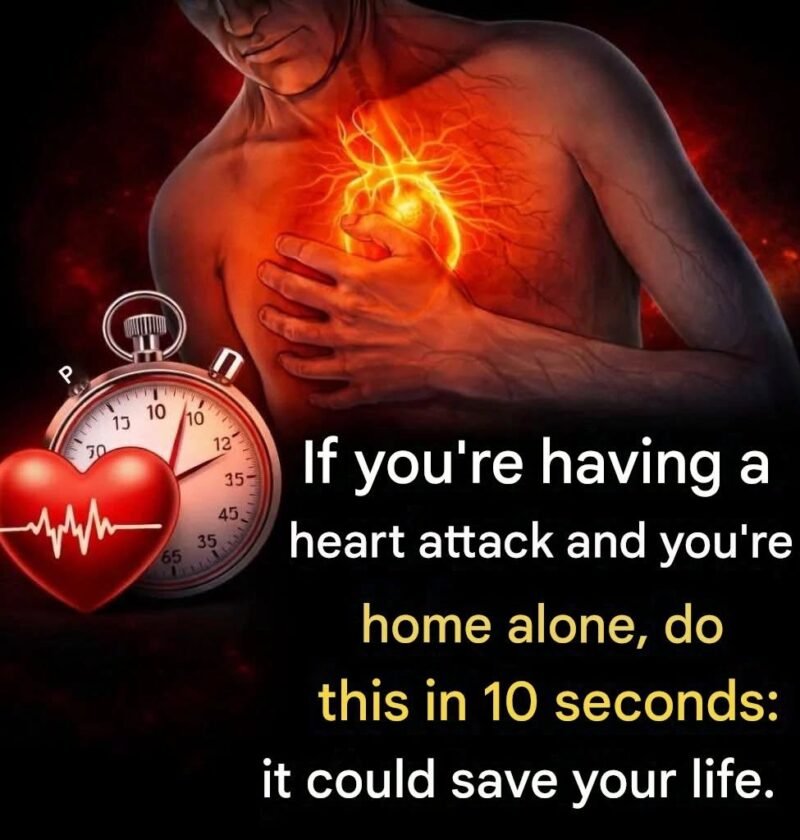
If you think you’re having a heart attack, don’t rely on a “10-second trick”
There is no breathing technique, coughing maneuver, drinking water, or body position that can reliably stop a heart attack in 10 seconds. Viral posts sometimes promote “cough CPR” or similar techniques, but these should not be used as a substitute for emergency treatment.
What to do immediately
-
Call your local emergency medical service immediately. Don’t wait to see if the symptoms disappear.
-
Stop what you’re doing and sit or lie in a comfortable position.
-
Unlock the door and, if possible, have someone stay with you.
-
If you have prescribed nitroglycerin, use it exactly as previously instructed.
-
Aspirin may be appropriate for some people, but it isn’t safe for everyone. Follow your local emergency service’s instructions; don’t take it if you’ve been told to avoid aspirin or have an allergy or certain bleeding conditions.
-
If you become unconscious and aren’t breathing normally, someone should begin CPR and use an AED if available.
Typical heart-attack symptoms include pressure, squeezing, or pain in the chest, pain spreading to the arm, shoulder, back, neck, jaw, or upper abdomen, shortness of breath, sweating, nausea, or unexplained weakness.
If these symptoms are happening right now, call emergency services now rather than continuing to read.