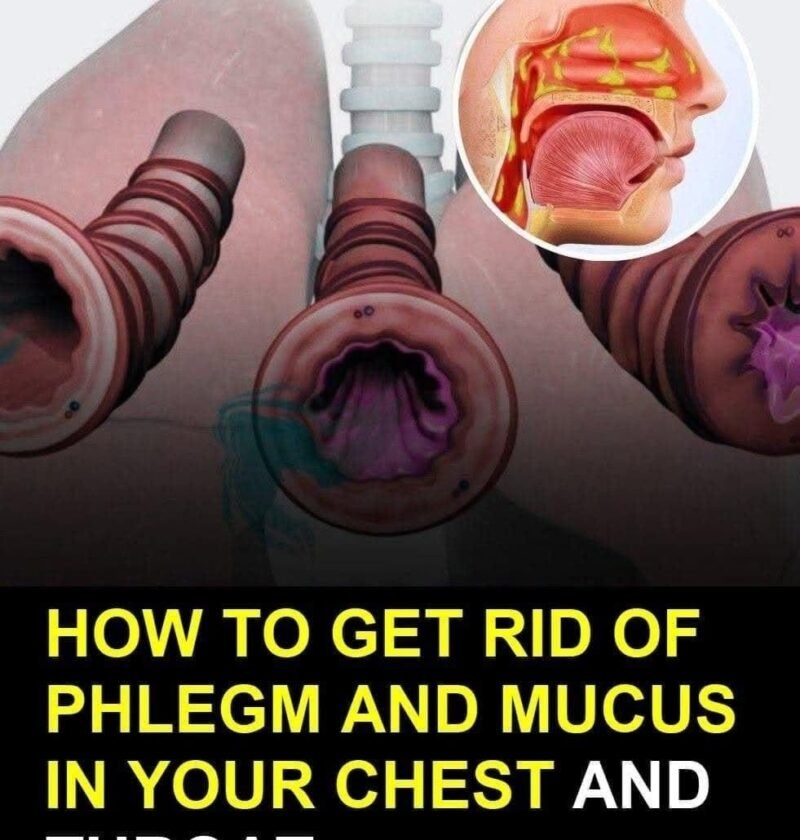
If you’re dealing with phlegm or mucus in your chest and throat, the goal is usually to thin it and help your body clear it, rather than trying to stop a productive cough.
Natural ways to loosen mucus
-
Drink plenty of water: Good hydration helps thin mucus so it is easier to cough up. nhs.uk+1
-
Try warm liquids: Warm water or tea with honey and lemon can soothe an irritated throat and cough. Honey should not be given to children under 1 year. nhs.uk
-
Use humidified air: A properly maintained humidifier or a warm shower can help loosen thick mucus. Avoid inhaling steam from a bowl of boiling water because of the burn risk. nhs.uk+1
-
Gargle with salt water: Mix about ½ teaspoon of salt in a glass of warm water, gargle, and spit it out. This can soothe throat irritation. nhs.uk
-
Try a saline nasal rinse if mucus is coming from the nose/sinuses and dripping into your throat. Use appropriately prepared sterile/distilled or previously boiled and cooled water rather than ordinary tap water. nhs.uk
-
Keep moving: Gentle walking and regular movement can help you avoid the stagnation that occurs with prolonged inactivity.
-
Don’t smoke: Cigarettes and secondhand smoke can worsen coughing and mucus production. MedlinePlus
-
Sleep with your head slightly elevated if mucus and coughing are worse when lying down. nhs.uk
When phlegm needs medical attention
Seek medical care if you have difficulty breathing, significant chest pain, coughing up blood, severe or rapidly worsening symptoms, or a cough lasting more than about 3 weeks. nhs.uk+1
Also, persistent phlegm isn’t necessarily an infection. Allergies/postnasal drip, asthma, COPD, acid reflux, smoking, and some medications can cause chronic coughing or mucus. MedlinePlus
If you tell me how long you’ve had the phlegm, its color (clear/white/yellow/green), whether you have fever or wheezing, and your age, I can help narrow down the likely cause and what to do next.