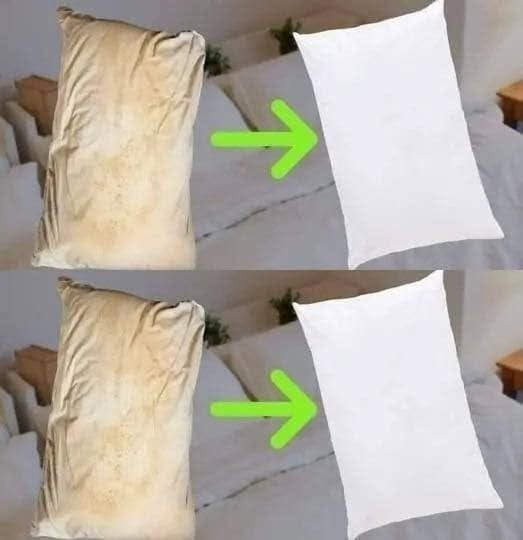
Absolutely. Here’s a detailed, practical method for getting washable bed pillows clean, bright, and fresh-smelling.
What you’ll need
-
2 washable bed pillows
-
Mild liquid laundry detergent
-
Baking soda
-
White vinegar
-
A few clean towels
-
Optional: oxygen-based laundry whitener for white, washable pillows
-
Washing machine and dryer, if the pillow’s care label permits them
Step-by-step
1. Check the care label first
Look at the pillow’s label before washing. Polyester and many cotton-filled pillows are often machine washable, while memory foam, latex, and some specialty pillows should not be put in a washing machine.
If the pillow has removable covers, wash the covers separately.
2. Remove surface dirt
Take off the pillowcase and protector and shake the pillow outdoors or over a washable surface. Vacuuming it gently can also remove dust, hair, and loose debris.
Inspect for stains, especially around the area where your head and neck rest.
3. Pre-treat yellow or greasy stains
Yellowing is often caused by sweat, body oils, and moisture.
Make a simple paste from:
-
2 tablespoons baking soda
-
A small amount of water
Apply it gently to stained areas and leave it for about 15–30 minutes. Don’t scrub aggressively, as this can damage the fabric or filling.
For stubborn stains, an oxygen-based laundry whitener can be used only if the pillow’s care instructions allow it.
4. Wash the pillows
If machine washing is permitted:
-
Wash two pillows together to help keep the washing machine balanced.
-
Use a small amount of mild liquid detergent.
-
Select a gentle or normal cycle using the warmest water allowed by the care label.
-
Avoid using excessive detergent—it can remain trapped inside the filling.
-
Run an extra rinse cycle to remove detergent thoroughly.
For white pillows, oxygen-based whitener can help brighten them, but follow the product and pillow-care instructions.
5. Be careful with bleach
Although chlorine bleach may seem like the easiest way to whiten pillows, it isn’t suitable for every fabric or filling. It can weaken fibers and sometimes make certain yellow stains appear worse.
Don’t mix bleach with vinegar, ammonia, or other cleaning products.
6. Get them thoroughly dry
Drying is one of the most important steps.
If the care label allows tumble drying:
-
Use a low or medium heat setting appropriate for the pillow.
-
Add a couple of clean dryer balls or clean tennis balls to help break up clumps.
-
Stop periodically and fluff the pillows by hand.
-
Continue drying until the inside is completely dry.
If you’re air-drying them, place them somewhere with good airflow and turn/fluff them regularly.
Don’t put pillows away while they’re even slightly damp. Moisture trapped inside can lead to mildew and an unpleasant smell.
7. Make them smell fresh
Once completely dry, allow the pillows to air out in a well-ventilated area.
For a naturally fresh result, you generally don’t need to heavily perfume them. A clean pillowcase and pillow protector will help maintain the fresh smell.
If you want to use a scented laundry product, make sure it’s compatible with the pillow’s care instructions and don’t saturate the pillow with fragrance.
How often should you wash pillows?
For washable pillows, a general routine is:
-
Pillowcases: weekly
-
Pillow protectors: every few weeks or according to their care instructions
-
Pillows: roughly every 3–6 months, depending on use and care-label instructions
Replace pillows when they remain lumpy, flattened, damaged, or no longer provide adequate support.
Important: Never machine-wash memory-foam or latex pillows unless their manufacturer specifically says that they are washable.