Here’s a polished, evidence-based version that keeps the engaging headline without implying that dry mouth points to one specific disease.
Waking Up With Dry Mouth? Here’s What Your Body Might Be Telling You
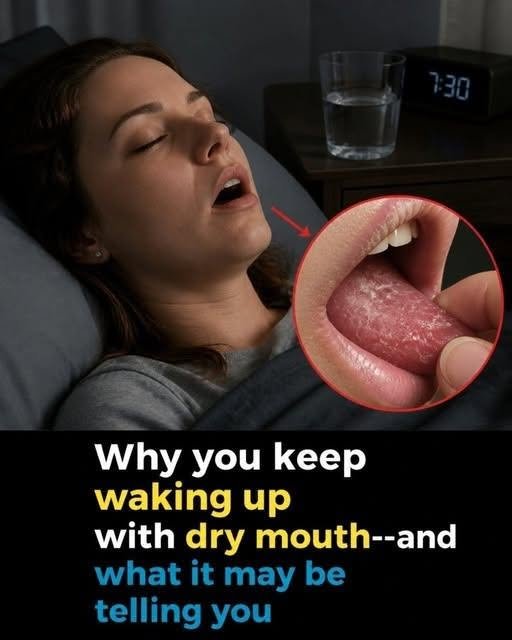
Waking up with a dry, sticky mouth is common and often harmless. But if it happens regularly, it may be worth looking at your sleep habits, medications, hydration, and overall health.
Common reasons for morning dry mouth
1. Sleeping with your mouth open
Nasal congestion, allergies, or a blocked nose can cause you to breathe through your mouth during sleep, drying out the mouth and throat.
2. Snoring or sleep apnea
People who snore or have obstructive sleep apnea may breathe through their mouth during the night. Persistent loud snoring, gasping during sleep, morning headaches, or excessive daytime sleepiness should be discussed with a healthcare professional.
3. Not drinking enough fluids
Mild dehydration can contribute to a dry mouth. Drinking enough fluids throughout the day is important, although repeatedly waking up very thirsty deserves attention.
4. Medications
Many commonly used medicines can reduce saliva production. These include some antihistamines, antidepressants, decongestants, blood-pressure medicines, and other drugs.
5. Alcohol or tobacco use
Alcohol can contribute to dehydration, while smoking and other tobacco products can irritate the mouth and affect saliva production.
6. Certain medical conditions
Persistent dry mouth can sometimes occur with conditions such as diabetes or disorders affecting the salivary glands. It doesn’t mean you have one of these conditions, but ongoing symptoms should be evaluated.
What can help?
-
Drink water regularly during the day.
-
Treat nasal congestion appropriately if it is causing mouth breathing.
-
Avoid excessive alcohol and tobacco.
-
Consider a humidifier if your bedroom air is very dry.
-
Chewing sugar-free gum can stimulate saliva production.
-
Maintain good oral hygiene because reduced saliva can increase the risk of tooth decay and oral infections.
When should you seek medical advice?
Talk with a healthcare professional or dentist if dry mouth is persistent, severe, or accompanied by frequent urination, extreme thirst, difficulty swallowing, mouth sores, or unexplained weight changes.
And if you take prescription medication, don’t stop it because of dry mouth without discussing alternatives or adjustments with your healthcare professional.
Morning dry mouth is usually a symptom, not a diagnosis. Finding the underlying cause is more useful than assuming it signals a particular disease.