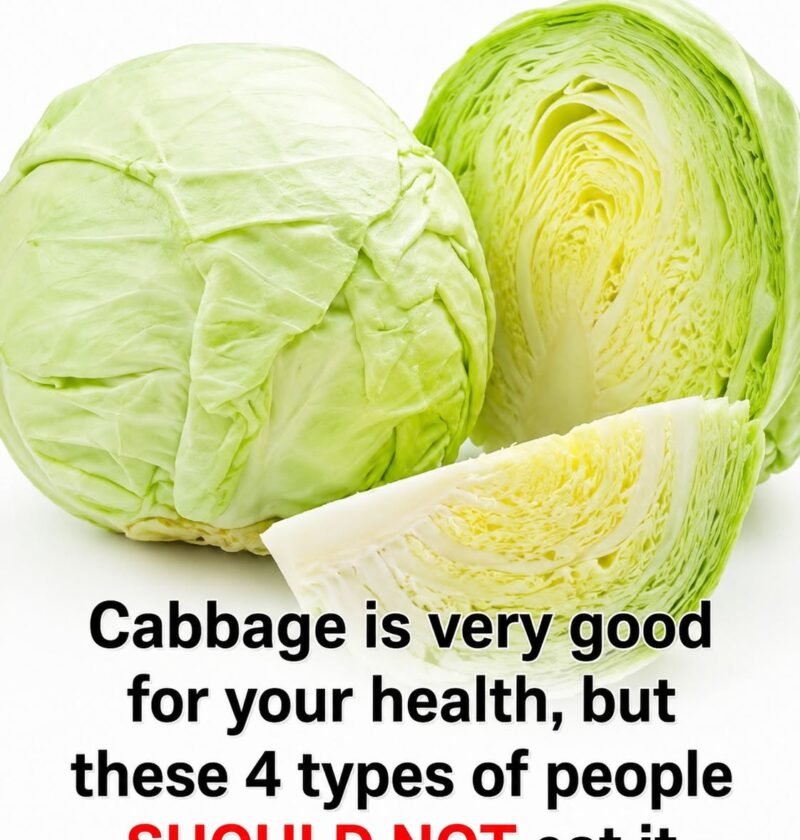
Cabbage is widely celebrated as a nutritional powerhouse packed with vitamin C, vitamin K, fiber, and potent antioxidants. However, like many cruciferous vegetables, it contains powerful bioactive compounds that can interact poorly with certain health conditions, medications, or digestive systems.
While most people can enjoy cabbage safely, health experts generally advise four specific groups of people to limit or avoid eating it:
1. People Taking Blood-Thinning Medications (Like Warfarin)
-
The Concern: Cabbage is exceptionally rich in Vitamin K, a nutrient that plays a direct, essential role in blood clotting.
-
Why to avoid or limit: If you take anticoagulant medications (such as Warfarin or Coumadin) to prevent blood clots, suddenly eating high-Vitamin K foods like cabbage can counteract your medication and alter your INR levels, increasing your risk of clotting. (Note: You don’t necessarily have to ban it entirely if you are on blood thinners, but your intake must remain strictly consistent day-to-day so your doctor can manage your dosage).
2. Individuals with Hypothyroidism (Underactive Thyroid)
-
The Concern: Raw cabbage contains compounds called goitrogens.
-
Why to avoid or limit: Goitrogens can interfere with the thyroid gland’s ability to absorb iodine, which is necessary for producing thyroid hormones. For individuals with an underactive thyroid (hypothyroidism) or iodine deficiency, eating large amounts of raw cabbage can potentially worsen fatigue, weight gain, and sluggish thyroid function. (Cooking cabbage significantly reduces its goitrogenic effect).
3. People with Severe IBS or Sensitive Digestive Systems (GERD/Gas)
-
The Concern: Cabbage is rich in insoluble fiber and contains fermentable oligosaccharides (FODMAPs), specifically raffinose.
-
Why to avoid or limit: If you suffer from Irritable Bowel Syndrome (IBS), chronic bloating, or severe acid reflux, your digestive tract may struggle to break down these complex sugars. Fermentation by gut bacteria produces excess gas, leading to uncomfortable cramping, bloating, and flatulence. Furthermore, for some people, raw cruciferous veggies can trigger acid reflux or indigestion.
4. Individuals with Advanced Kidney Disease
-
The Concern: Cabbage is often touted as a kidney-friendly vegetable because it is relatively low in potassium compared to other greens. However, for individuals with advanced, late-stage chronic kidney disease (CKD)—particularly those on dialysis—fluid, mineral, and specific dietary fiber restrictions become extremely strict.
-
Why to avoid or limit: When kidney filtration is severely compromised, the body cannot properly balance fluid and mineral loads, requiring strict, personalized medical nutrition therapy where even generally healthy vegetables must be carefully portioned or avoided.
A Quick Tip for Cabbage Lovers
If you fall into one of the categories where raw cabbage causes issues—particularly regarding digestion or thyroid concerns—cooking cabbage thoroughly (steaming, boiling, or roasting) breaks down many of the harsh fibers and goitrogenic compounds, making it significantly easier on the body.
Are you looking out for a specific dietary restriction, or trying to manage a health condition like thyroid or digestive issues?