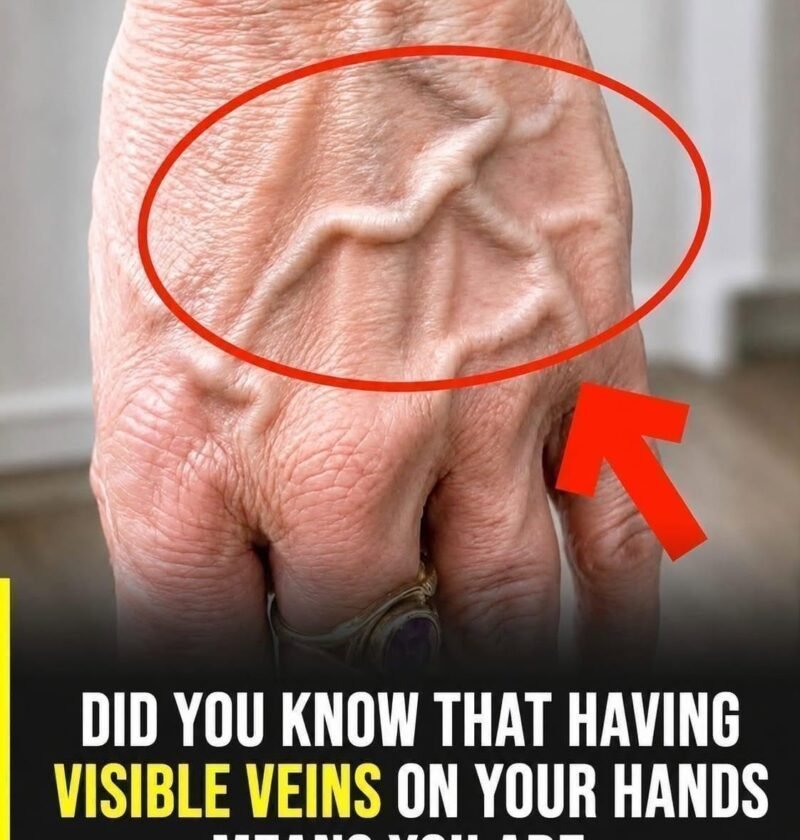
If you mean the viral “visible veins mean you are…” claim, the missing ending is often something like “healthy,” “fit,” or “low in body fat.” But visible veins don’t prove any of those things.
Why your veins may be visible
Prominent veins can simply be a normal variation caused by:
- Genetics — some people naturally have more superficial veins.
- Lower body fat — less tissue covers the veins.
- Exercise — increased blood flow and temporary muscle swelling can make veins more prominent.
- Heat — blood be assessed by a healthcare professional. One-sided leg swelling and pain can be symptoms vessels widen in warm conditions.
- Age — skin becomes thinner and loses some elasticity.
- Dehydration — can sometimes make veins appear more noticeable, although intentionally dehydrating yourself is unsafe.
When visible veins may be a warning sign
A vein that suddenly becomes prominent, particularly with pain, redness, warmth, swelling, or tenderness, should be assessed by a healthcare professional. One-sided leg swelling and pain can be symptoms of a blood clot.
If prominent veins are accompanied by sudden chest pain, difficulty breathing, coughing up blood, or fainting, seek emergency medical care.
So, visible veins by themselves usually aren’t a reliable sign of a particular vitamin deficiency, disease, or level of fitness.