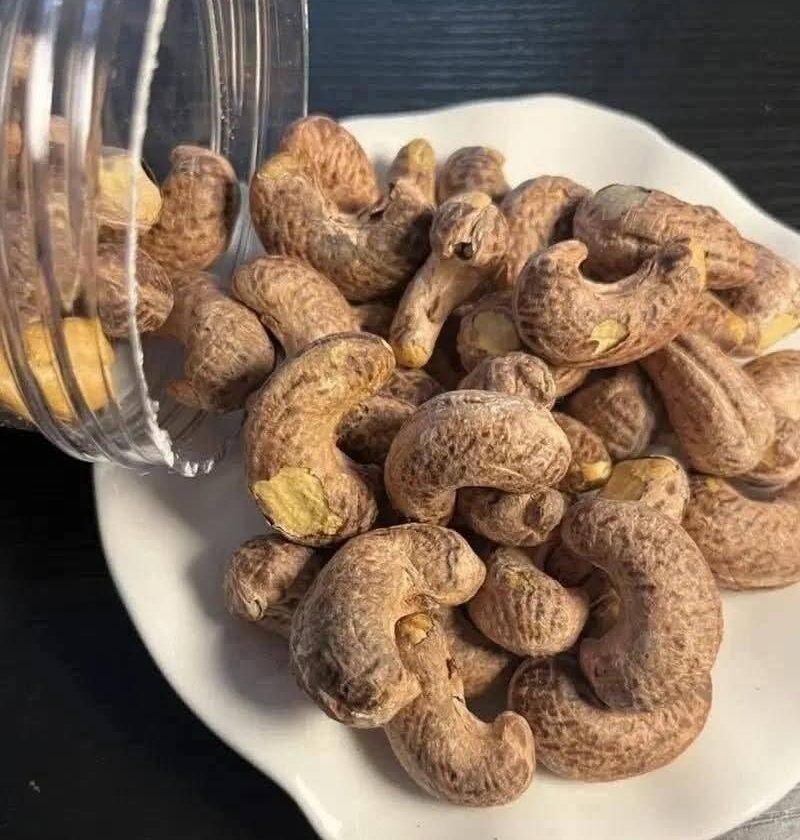
🥜 “Doctors Reveal That Eating Cashews Causes…” — What’s the Truth?
The headline is incomplete and designed to make you curious. For most people, cashews are a nutritious food, not something doctors recommend avoiding. They provide unsaturated fats, plant protein, magnesium, copper, zinc, and other nutrients. Cleveland Clinic+1
What can happen if you eat cashews?
- Allergic reactions: Cashew allergy can be serious and can cause anaphylaxis. Anyone with a known tree-nut allergy should follow their clinician’s advice about avoiding cashews. WebMD
- Bloating or digestive discomfort: Large portions can cause gas or bloating in some people, and cashews may trigger symptoms in people sensitive to FODMAPs. WebMD
- Extra calories: Cashews are nutritious but calorie-dense, so large portions can make it easy to consume more calories than intended. Salted varieties can also add substantial sodium. Cleveland Clinic
- Kidney-stone considerations: People who have had calcium-oxalate kidney stones may be advised to limit high-oxalate foods, including nuts and nut products. This is an individualized dietary recommendation—not a reason for everyone to avoid cashews. NIDDK
🥜 A reasonable portion
For most people, a small handful (roughly 1 ounce/28 g) of unsalted cashews is a reasonable snack. Choose plain or lightly roasted varieties when possible.
Bottom line: Cashews don’t “cause” a particular disease in healthy people. The major concerns are nut allergy, portion size, digestive tolerance, and individual dietary restrictions such as certain kidney-stone diets.
Sources