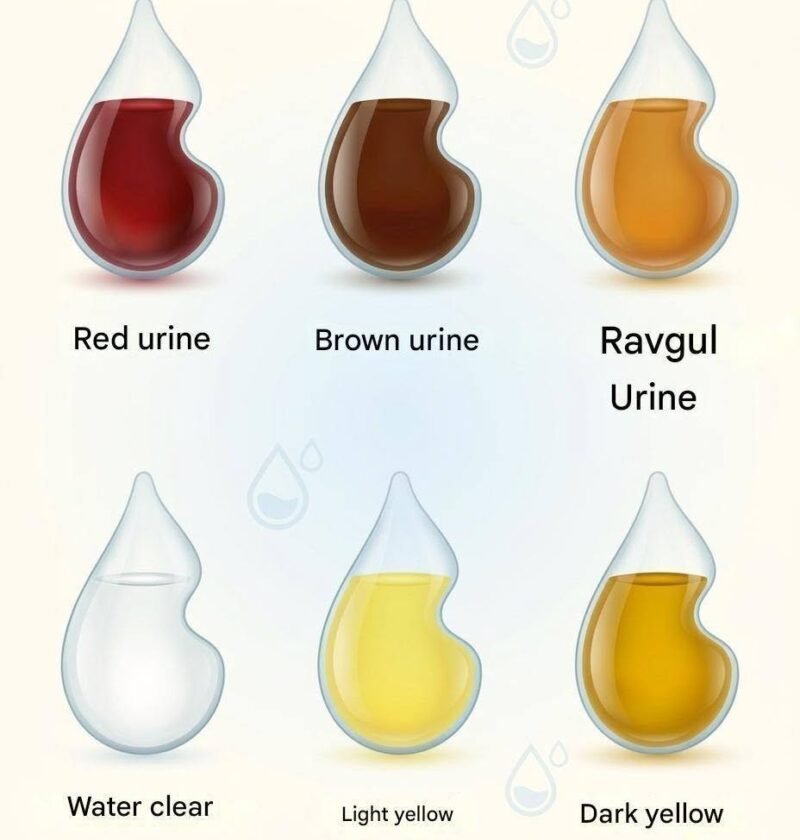
🚽 What Does the Color of Your Urine Say About Your Health?
Urine color can give you some clues about hydration and certain health problems, but it cannot diagnose a condition by itself.
- 🟨 Pale yellow: Usually normal and often consistent with good hydration.
- 🟡 Dark yellow/amber: Often means urine is concentrated, commonly from not drinking enough fluid.
- 💧 Completely clear: Usually means you’re well hydrated, although constantly drinking excessive amounts of water isn’t necessary.
- 🟠 Orange: Can result from dehydration or certain medicines. Persistent orange urine should be checked.
- 🩷 Pink or red: May be caused by blood, although foods such as beetroot can also change urine color. Unexplained blood should be medically evaluated.
- 🟤 Brown or tea-colored: Can occur with severe dehydration, certain medications, liver problems, or muscle injury and warrants medical attention if unexplained.
- 🟢 Green or blue: Rare and can result from certain medications, dyes, or occasionally infections.
- ☁️ Cloudy or milky: May occur with dehydration, crystals, urinary infection, or other conditions.
Other clues matter too
Pay attention to burning when urinating, fever, back or side pain, unusual odor, increased frequency, or a major change in how much you urinate. These symptoms can be more informative than color alone.
Vitamin supplements—especially B-complex vitamins—can also make urine strikingly bright yellow without indicating a problem.
🚨 When to get medical help
Seek prompt medical advice for visible blood in your urine, persistent brown urine, jaundice, severe flank/back pain, fever, or unexplained persistent changes.
Bottom line: Pale yellow urine is generally reassuring, while dark yellow urine often means it’s more concentrated. But urine color isn’t a complete health test, and persistent or unusual changes deserve attention.