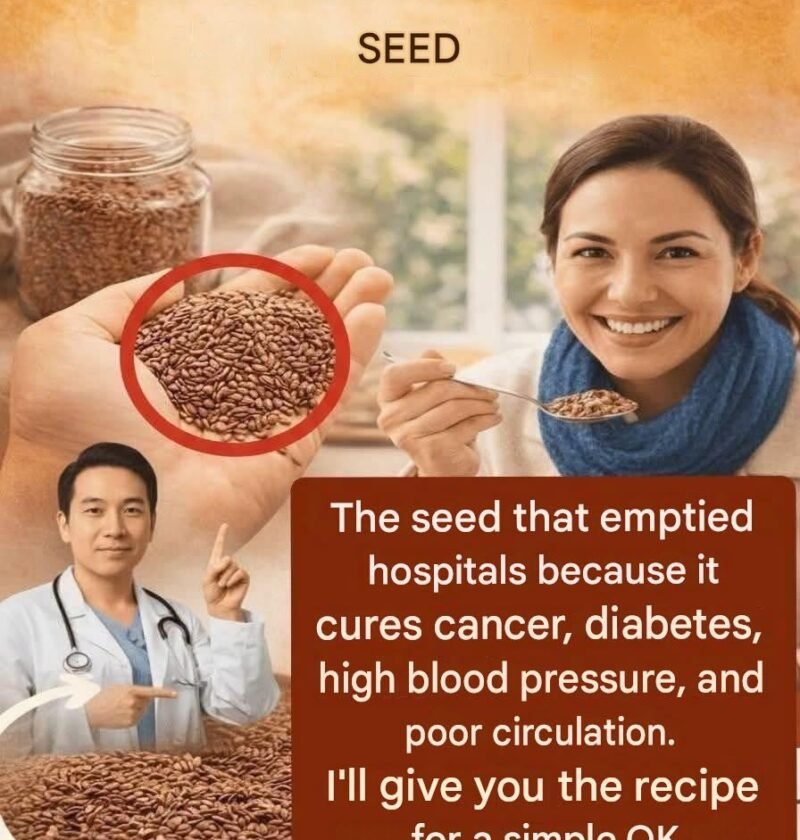
🌱 “These Seeds Destroy Even the Deadliest Disease” — What’s the Truth?
This is a classic health headline, but no seed has been proven to destroy “the deadliest diseases” or cure cancer and other serious illnesses.
Seeds can certainly be nutritious. Depending on the type, they may provide fiber, protein, healthy fats, magnesium, zinc, vitamin E, and other nutrients. Examples include flaxseed, chia, pumpkin, sunflower, and sesame seeds.
What seeds can realistically do
- Flax and chia seeds: Their fiber can support bowel regularity, and flax provides alpha-linolenic acid (ALA), a plant-based omega-3 fat.
- Pumpkin seeds: Provide protein, magnesium, zinc, and other nutrients.
- Sesame seeds: Provide healthy fats, protein, fiber, and minerals.
- Sunflower seeds: Provide vitamin E and unsaturated fats.
Some individual seed compounds have shown interesting effects in laboratory or animal research, but that is very different from demonstrating that eating the seeds treats or cures a disease in humans.
⚠️ Be skeptical of “miracle seed” claims
A food should not replace prescribed treatment for cancer, diabetes, heart disease, infections, or other serious conditions. Extremely large quantities or concentrated seed extracts can also cause problems, including digestive symptoms or medication interactions.
Bottom line: Seeds can be an excellent part of a balanced diet, but there is no scientifically established seed that destroys even the “deadliest disease.” If you tell me which seeds the claim is referring to, I can explain the actual evidence and potential benefits.