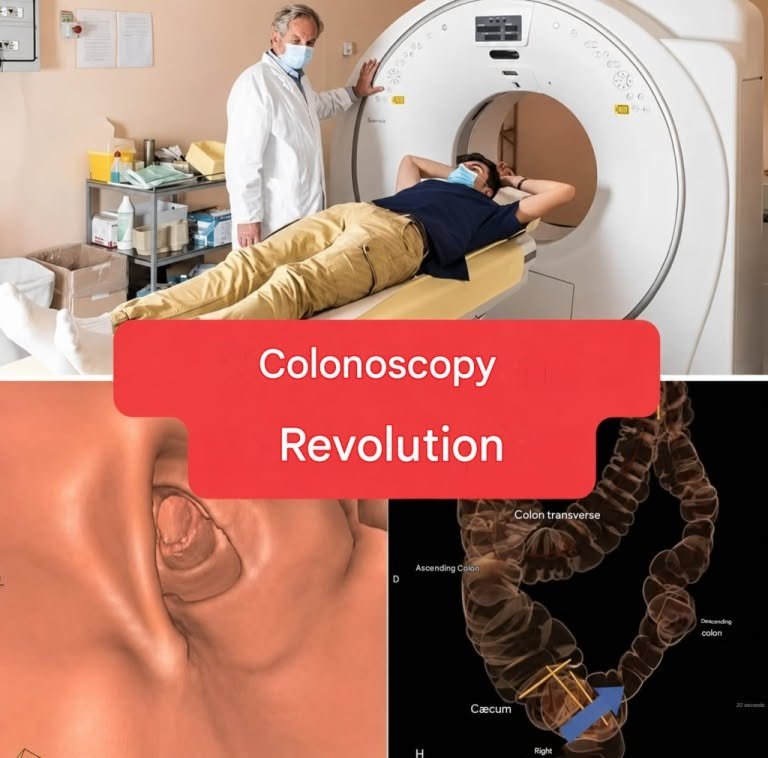
If you’re referring to claims that a “new method” means colonoscopy is no longer invasive, the reality is more nuanced.
What could the claim be referring to?
There are several newer or less-invasive approaches to examining the colon:
- CT colonography (“virtual colonoscopy”) uses CT scans to look for polyps and cancer without inserting a long flexible camera through the entire colon. However, the bowel still needs to be prepared, and a small tube is usually placed in the rectum to introduce gas.
- Colon capsule endoscopy involves swallowing a capsule containing tiny cameras. It can visualize much of the colon without a traditional scope, but bowel preparation is still generally required.
- Stool-based tests, such as FIT, look for hidden blood associated with colorectal cancer and are completely non-invasive. They are screening tests rather than a direct examination of the colon.
Why traditional colonoscopy is still important
A conventional colonoscopy allows a doctor to directly see the colon and remove suspicious polyps or take biopsies during the same procedure. That therapeutic capability is a major advantage over purely imaging- or stool-based screening.
So, while less-invasive alternatives exist and continue to develop, it isn’t accurate to say that traditional colonoscopy has simply become obsolete or that colonoscopy itself is no longer invasive.
If you share part 2 of the claim or the name of the “new method,” I can explain exactly what technology it’s referring to and whether it’s actually available as a replacement for colonoscopy.