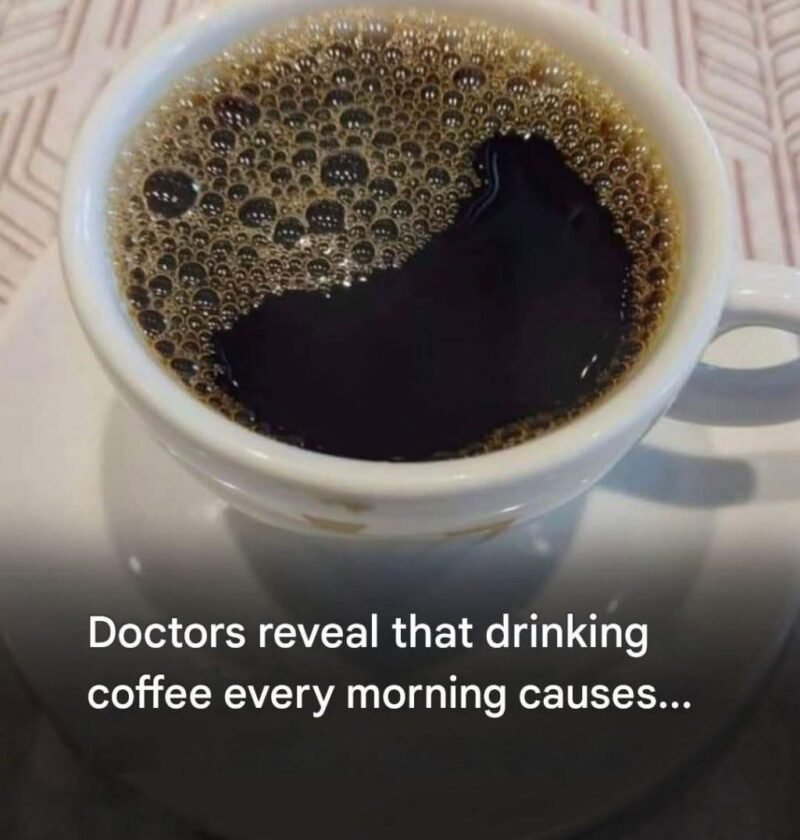
If you’re referring to the viral headline “Doctors reveal that drinking coffee every morning causes…”, the claim needs context. Current evidence does not show that simply drinking coffee every morning causes a specific disease or health disaster.
In fact, a 2026 American Heart Association scientific statement says that up to about 400 mg of caffeine per day—roughly 3–5 typical 8-ounce cups of coffee—is generally safe for most adults. Moderate coffee consumption is also associated with lower risks of several cardiovascular conditions, although much of the evidence is observational. American Heart Association+1
What morning coffee can actually do
- ☕ Temporarily raise blood pressure and heart rate, particularly in people who aren’t accustomed to caffeine. professional.heart.org
- 😴 Interfere with sleep if caffeine is consumed late enough in the day.
- ❤️ Cause palpitations or jitteriness in caffeine-sensitive people.
- 🩸 Affect cholesterol depending on preparation. Unfiltered coffee, such as French press, Turkish, or boiled coffee, contains cafestol, which can raise LDL (“bad”) cholesterol. Paper-filtered coffee largely removes it. www.heart.org
- 🩺 Be associated with favorable health outcomes. Research has linked moderate coffee consumption with lower risks of type 2 diabetes, heart disease and stroke, although these associations don’t prove that coffee itself prevents those conditions. American Heart Association
Interestingly, a large observational study published in 2025 found that morning-type coffee drinking was associated with lower overall and cardiovascular mortality compared with not drinking coffee. That does not prove that morning coffee extends life, but it certainly doesn’t support the claim that morning coffee is inherently harmful. PubMed
Bottom line: For most healthy adults, a morning cup of coffee is not something to fear. The amount of caffeine, what you add to the coffee, your individual sensitivity, medications, blood pressure, heart rhythm, and sleep quality all matter. www.heart.org
Sources