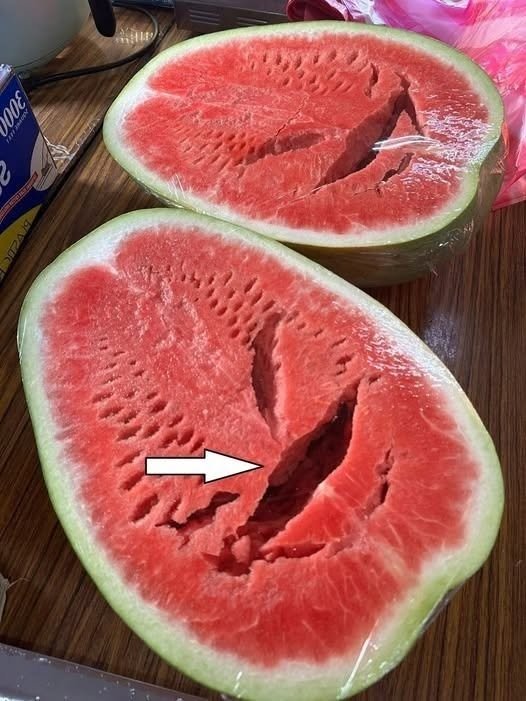
Cracks inside a watermelon do not automatically mean it is unsafe to eat. The viral warning is misleading.
If you cut open a watermelon and see internal cracks, splits, or hollow-looking areas, they can result from rapid growth, inconsistent watering, temperature changes, or a condition sometimes called hollow heart. The flesh may still be perfectly edible.
When should you throw it away?
Don’t eat the watermelon if the flesh has signs of spoilage such as:
- A foul or fermented smell
- Slimy or unusually mushy flesh
- Mold or fuzzy growth
- Significant discoloration that looks abnormal
- Liquid leaking from the fruit or obvious decomposition
- A swollen, damaged rind accompanied by signs of spoilage
A watermelon with a clean-looking crack but normal smell, color, and texture isn’t automatically dangerous. Cut away questionable areas and use your normal food-safety judgment.
Also, wash the outside of the watermelon before cutting it. Bacteria on the rind can potentially be transferred to the flesh by a knife.
So the accurate takeaway is: “Cracks = dangerous” is not a reliable food-safety rule. Check the entire fruit for signs of spoilage instead.