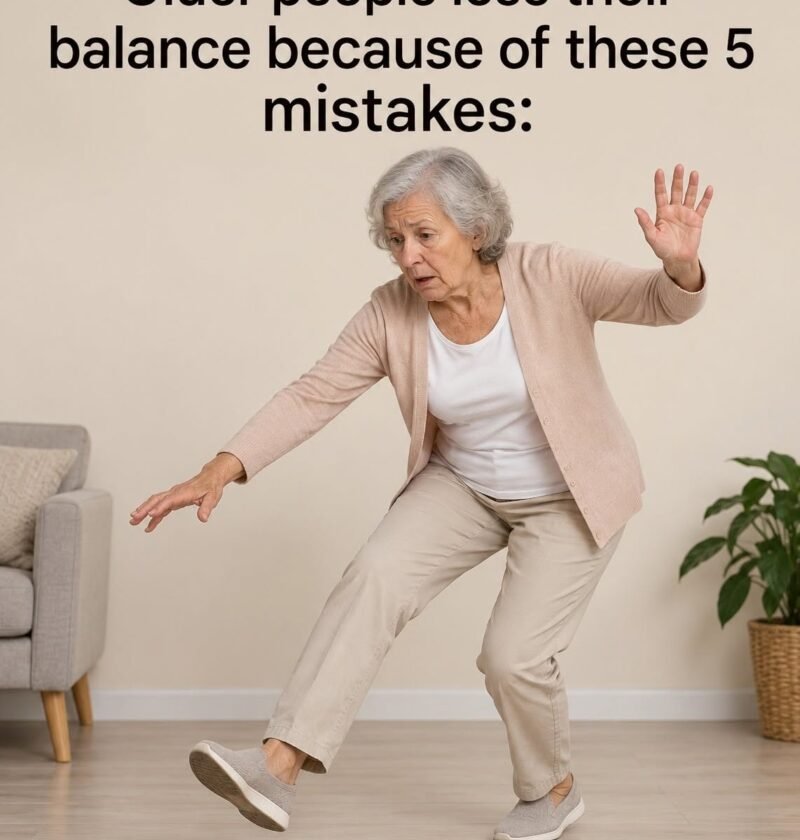
5 Common Mistakes That Can Affect Balance in Older Adults
Balance naturally can change with age, but some everyday habits can make unsteadiness and falls more likely.
-
Being too sedentary
Spending most of the day sitting can weaken the legs and core and reduce coordination. Regular walking and strength and balance exercises can help maintain mobility. -
Ignoring vision problems
Poor vision can make it harder to detect obstacles, judge steps, or navigate uneven surfaces. Regular eye examinations and appropriate glasses are important. -
Wearing unsuitable footwear
Loose slippers, smooth soles, high heels, or poorly fitting shoes can increase the risk of slipping or tripping. Supportive, well-fitting shoes with good traction are generally preferable. -
Getting up too quickly
Standing suddenly can cause a temporary drop in blood pressure (orthostatic hypotension), resulting in dizziness or unsteadiness. Sitting on the edge of the bed for a moment before standing can help. -
Overlooking medication effects
Some medications can cause dizziness, drowsiness, low blood pressure, or blurred vision. Taking multiple medications can increase the likelihood of side effects. A doctor or pharmacist can review the medication list and identify potential problems.
When balance changes need attention
New or worsening balance problems shouldn’t simply be dismissed as “getting older.” Recurrent falls, unexplained dizziness, fainting, difficulty walking, or sudden loss of coordination warrant medical evaluation.
Sudden difficulty walking or maintaining balance—especially alongside facial drooping, arm weakness, speech difficulty, severe headache, or vision changes—can be a sign of a stroke and requires emergency medical attention.