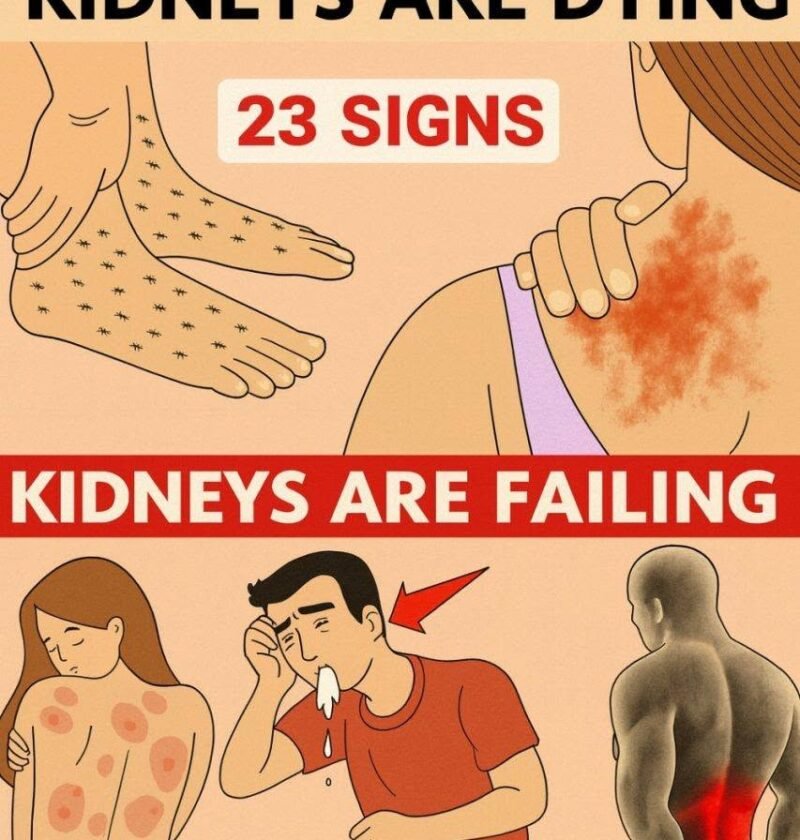
⚠️ 23 Possible Signs Your Kidneys May Be in Trouble
The headline is a little dramatic. Early chronic kidney disease (CKD) often causes no symptoms at all, so you shouldn’t wait for a long list of warning signs before getting checked. Blood and urine tests are often the only way to detect kidney problems early. (NIDDK)
As kidney function becomes significantly impaired, possible symptoms can include:
- Swollen ankles, feet, legs, hands, or around the eyes
- Foamy or unusually bubbly urine
- Blood in the urine
- Urinating more or less often than usual
- Needing to urinate frequently at night
- Persistent fatigue or weakness
- Trouble sleeping
- Muscle cramps
- Itchy or unusually dry skin
- Numbness or tingling
- Loss of appetite
- Nausea
- Vomiting
- Unexplained weight loss
- Changes in taste or a metallic/bad taste
- Difficulty concentrating
- Headaches
- Shortness of breath
- Chest discomfort or pain
- High blood pressure or worsening blood pressure
- Fluid-related weight gain or increasing swelling
- Joint pain or stiffness
- Confusion or memory problems in advanced kidney failure. (NIDDK)
🩺 The important part
Most of these symptoms can have many causes besides kidney disease. For example, nighttime urination, cramps, fatigue, and swelling aren’t proof that your kidneys are failing.
The biggest risk factors for CKD include diabetes, high blood pressure, heart disease, and a family history of kidney failure. If you have one of these, regular kidney testing is particularly important. (NIDDK)
A healthcare professional can check kidney function with blood tests such as creatinine/eGFR and urine testing for albumin or other abnormalities.
🚨 Seek urgent medical attention for severe shortness of breath, chest pain, severe confusion, very little or no urine, or rapidly worsening swelling.
Bottom line: Don’t try to diagnose kidney disease from symptoms alone. Early CKD can be completely silent, so testing is far more reliable than waiting for warning signs.