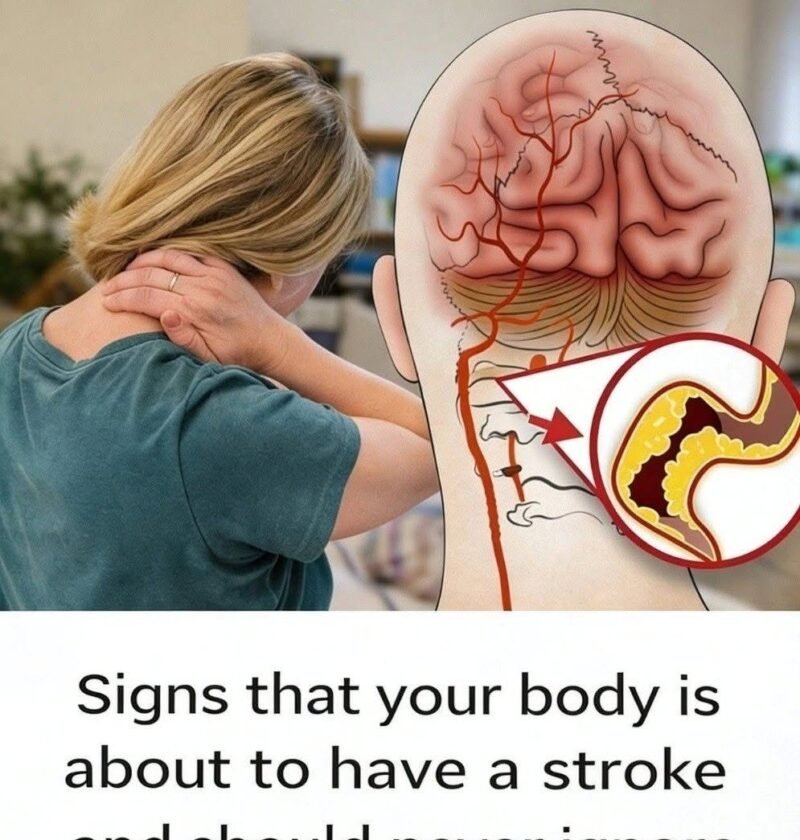
10 Early Warning Signs of a Stroke You Should Never Ignore
One important correction to the headline: strokes don’t necessarily give reliable warning signs days or weeks beforehand. The most important symptoms usually appear suddenly. A transient ischemic attack (TIA) can produce the same symptoms temporarily and is a medical emergency because it can warn of a future stroke. CDC+1
Watch for these sudden changes:
- Numbness or weakness on one side — especially the face, arm, or leg.
- One side of the face drooping — an uneven smile is a classic warning sign.
- Sudden difficulty speaking — slurred speech or inability to find or form words.
- Trouble understanding speech — suddenly being unable to understand what others are saying.
- Sudden vision changes — blurred, double, or lost vision in one or both eyes.
- Sudden loss of balance or coordination — difficulty walking, dizziness, or unexplained unsteadiness.
- A sudden severe headache — particularly a severe headache with no known cause.
- Sudden confusion — a marked, unexplained change in awareness or thinking.
- Sudden difficulty walking — especially when it occurs together with dizziness or coordination problems.
- Symptoms that disappear after a few minutes — this can be a TIA (“warning stroke”), and it still requires urgent medical assessment. www.stroke.org+1
🚨 Remember B.E. F.A.S.T.
- B — Balance: sudden loss of balance or coordination
- E — Eyes: sudden vision changes
- F — Face: one-sided facial drooping
- A — Arm: sudden weakness or numbness
- S — Speech: slurred or abnormal speech
- T — Time: call your local emergency service immediately CDC
Don’t wait to see whether symptoms improve. If they disappear, it could be a TIA, which still needs emergency evaluation. Also note the exact time the symptoms began, because this can affect treatment decisions. CDC+1
Bottom line: There is no dependable “one month before a stroke” symptom checklist. The safest approach is to recognize sudden neurological changes and act immediately. www.stroke.org
Sources