“A Month Before a Stroke, Your Body Warns You” — What You Should Know
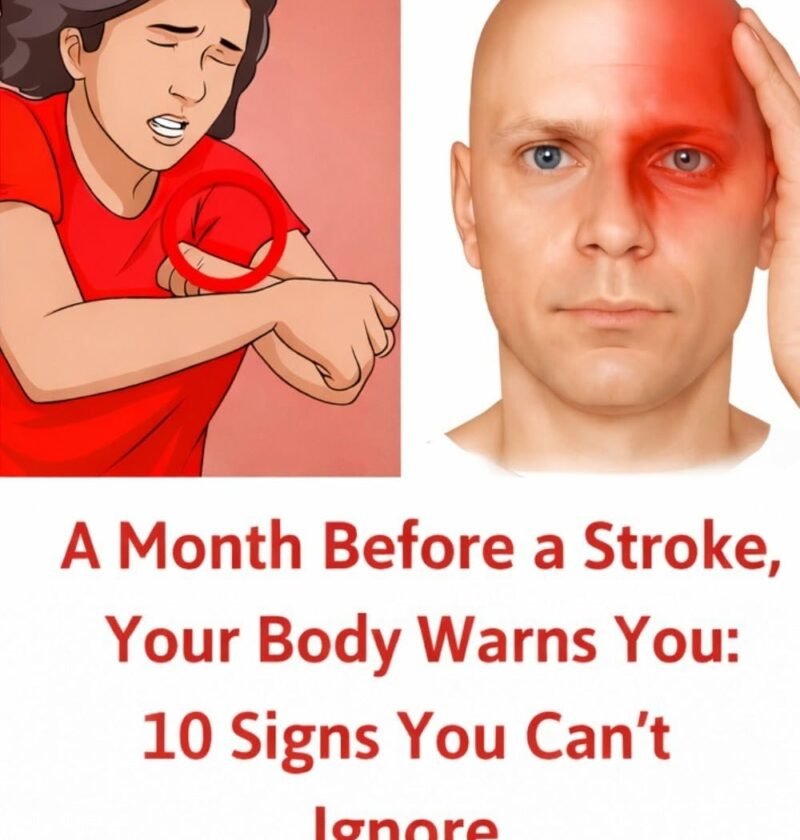
There isn’t a reliable set of 10 symptoms that predict a stroke exactly one month beforehand. Strokes can happen suddenly. However, a transient ischemic attack (TIA)—sometimes called a mini-stroke or warning stroke—can produce temporary stroke-like symptoms and may signal a higher risk of a future stroke.
🚨 10 symptoms you should never ignore
Especially when they start suddenly, seek immediate medical attention for:
- Sudden weakness or numbness, particularly on one side
- Facial drooping or numbness
- Slurred or difficult speech
- Difficulty understanding speech
- Sudden vision loss or major vision changes
- Sudden dizziness or loss of balance
- Sudden trouble walking or coordinating movements
- Sudden severe headache with no known cause
- Sudden confusion
- Sudden difficulty using an arm or leg normally
These are recognized stroke/TIA warning symptoms—not signs that necessarily appear weeks beforehand.
⏱️ Even if the symptoms disappear
This is particularly important. A TIA can last only minutes and then completely resolve, but that does not make it harmless. A suspected TIA requires urgent medical assessment because the risk of a subsequent stroke can be substantial, particularly in the days and weeks afterward.
🏥 Remember B.E. F.A.S.T.
B — Balance suddenly affected
E — Eyes/vision suddenly changed
F — Face drooping
A — Arm weakness
S — Speech difficulty
T — Time to call emergency services