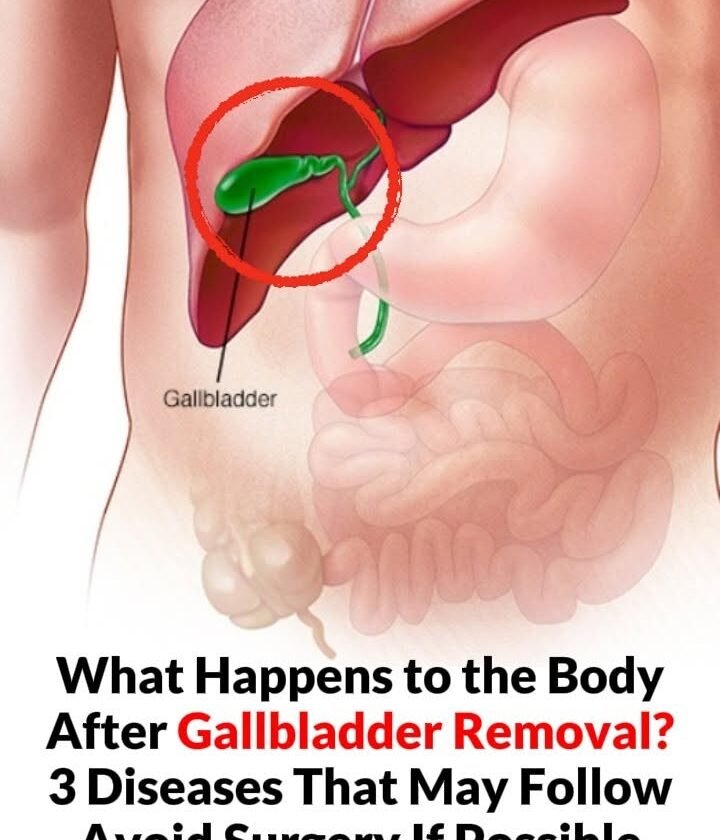
What Really Happens After Gallbladder Removal?
The headline “3 diseases that may follow—avoid surgery if possible” is misleading. Gallbladder removal (cholecystectomy) is a common procedure, and the gallbladder isn’t essential for normal digestion. After removal, the liver continues making bile, but instead of storing it in the gallbladder, bile flows directly into the intestine. Most people can return to a normal diet and live normally afterward.
What problems can occur?
Some people experience:
- Diarrhea or more frequent/looser stools, sometimes related to bile acids.
- Bloating, indigestion, or abdominal discomfort.
- Persistent symptoms that were present before surgery, particularly if the original pain wasn’t actually caused by gallstones.
These aren’t three inevitable “diseases.” Persistent diarrhea, for example, can often be investigated and treated.
⚠️ Surgery does have genuine risks
As with any operation, complications can include infection, bleeding, blood clots, bile leakage, or injury to the bile duct or nearby organs. These complications are uncommon, but they’re important to discuss with the surgical team.
Should you avoid gallbladder surgery?
Not if it’s medically indicated. Surgery is commonly recommended when gallstones are causing significant symptoms or complications such as inflammation, blockage, or pancreatitis. Removing the gallbladder can prevent further gallstone attacks and certain complications.
On the other hand, silent gallstones that aren’t causing symptoms often don’t require surgery.