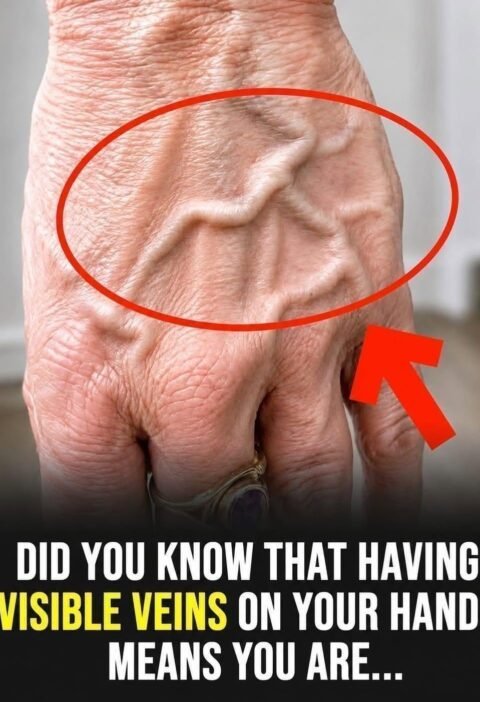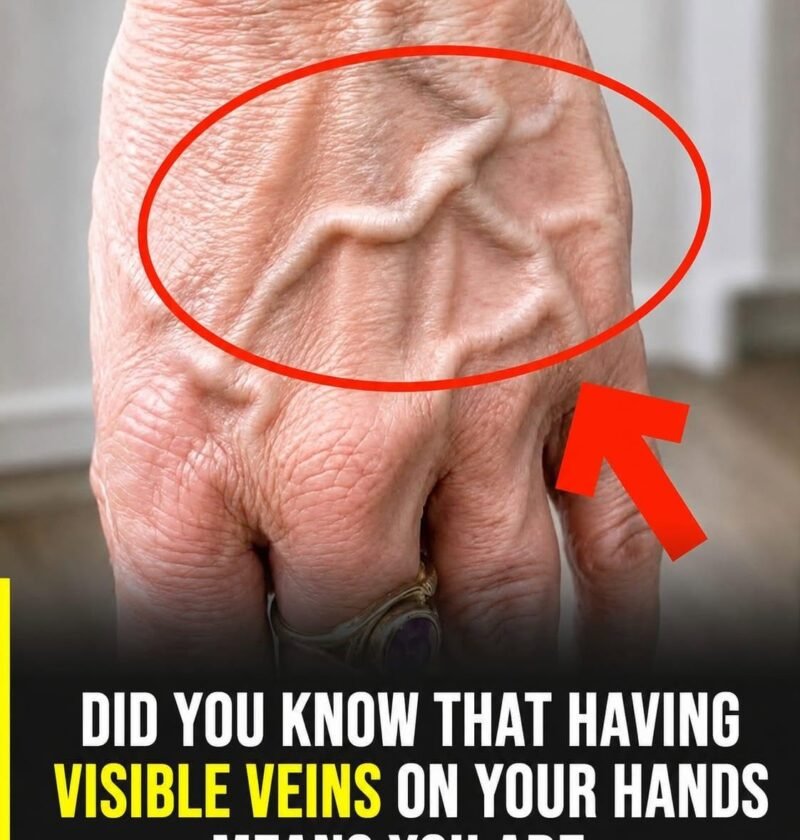
Visible veins usually don’t mean that something is wrong. Veins can become more noticeable because of several normal factors.
🩸 Visible veins may mean…
Low body fat: With less fat beneath the skin, superficial veins are easier to see.
Exercise: Physical activity temporarily increases blood flow and can make veins appear more prominent.
Heat: Warm temperatures cause blood vessels near the skin to widen.
Genetics: Some people naturally have more visible or superficial veins.
Age: Skin becomes thinner and loses some elasticity with age, making veins more apparent.
Dehydration: Significant dehydration can sometimes make veins look more prominent, although it’s not a reliable way to assess hydration.
Muscle development: Increased muscle mass can make superficial veins more visible.
🚨 When visible veins deserve attention
A new, suddenly prominent vein, particularly when accompanied by pain, swelling, redness, warmth, or tenderness, should be evaluated. A swollen, painful leg can sometimes be a sign of a blood clot.
Prominent veins in the legs can also be varicose veins, which may cause aching, heaviness, swelling, or itching.
So, visible veins alone aren’t a reliable indicator of fitness, health, or disease. The important clues are sudden changes and accompanying symptoms.