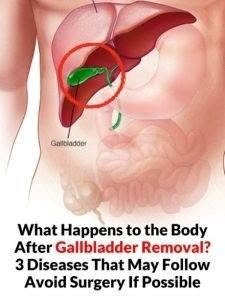
What Happens After Gallbladder Removal?
The headline “3 diseases that may follow—avoid surgery if possible” is misleading. Gallbladder removal (cholecystectomy) is a common and generally safe operation, and most people can live normally without a gallbladder. The liver continues to make bile; it simply flows directly into the intestine instead of being stored in the gallbladder.
N
NIDDK
+1
What problems can occur?
Some people experience:
Diarrhea or more frequent/softer stools — because bile enters the intestine more continuously. This is often temporary, although persistent cases can occur.
N
NIDDK
+1
Indigestion, bloating, or abdominal discomfort — sometimes grouped under post-cholecystectomy symptoms. Persistent symptoms may need investigation because they can have causes unrelated to the gallbladder.
N
nhs.uk
+1
Surgical complications — uncommon but potentially serious complications include infection, bleeding, bile leakage, blood clots, or injury to the bile ducts.
N
nhs.uk
These are complications or symptoms, not three diseases that everyone develops.
Should you avoid gallbladder surgery?
Not necessarily. If gallstones are causing repeated attacks, inflammation, bile-duct blockage, or pancreatitis, surgery is often recommended because untreated gallstones can cause serious complications.
N
NIDDK
+1
On the other hand, silent gallstones that cause no symptoms often don’t require surgery.
N
NIDDK
+1
Bottom line: Gallbladder removal doesn’t mean you’ll develop chronic disease. The decision should depend on why surgery is being recommended, your symptoms, your overall health, and the risks of leaving the gallbladder problem untreated.
N
NIDDK
N
N
Sources