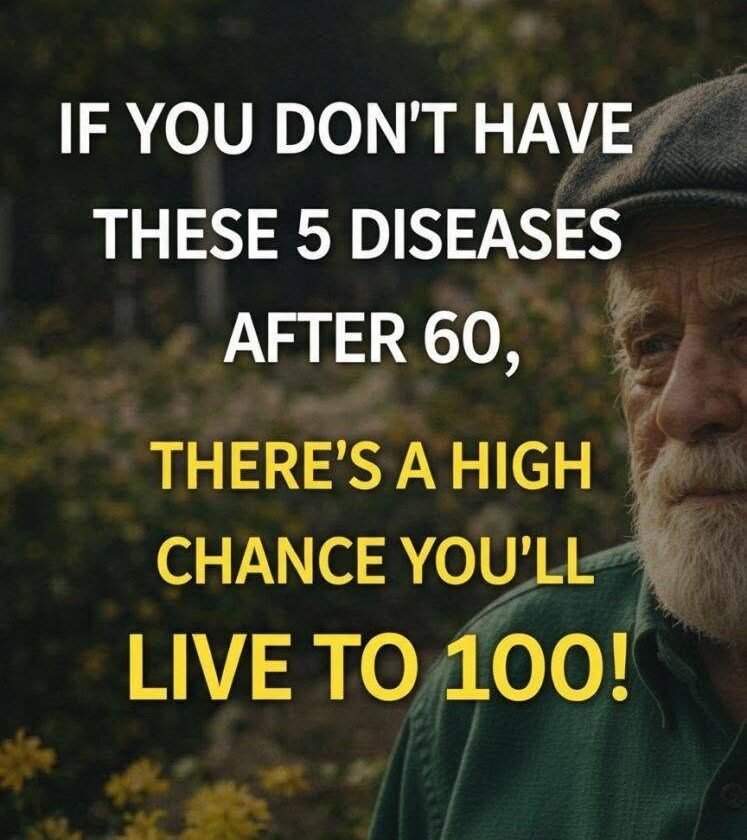
That headline is too absolute. Reaching 60 without certain chronic diseases can be a good sign, but it does not mean you have a high probability of reaching 100.
Five major conditions that are strongly associated with healthy aging are:
Heart disease
Stroke
Cancer
Type 2 diabetes
Dementia or significant cognitive impairment
Avoiding these by age 60 may indicate a lower burden of disease, but longevity also depends on genetics, blood pressure, cholesterol, smoking, physical activity, diet, alcohol use, socioeconomic factors, infections, accidents, and access to healthcare.
Most importantly, being disease-free at 60 isn’t a guarantee of exceptional longevity. Even among people who reach 60 in good health, relatively few reach 100.
The encouraging part is that many longevity-related factors are modifiable: don’t smoke, stay physically active, maintain a healthy weight, control blood pressure and cholesterol, eat a balanced diet, sleep adequately, maintain social connections, and keep up with recommended screening and vaccinations.
So a better interpretation of the viral claim is: being healthy at 60 is associated with better odds of living longer, but there is no five-disease checklist that predicts reaching 100.