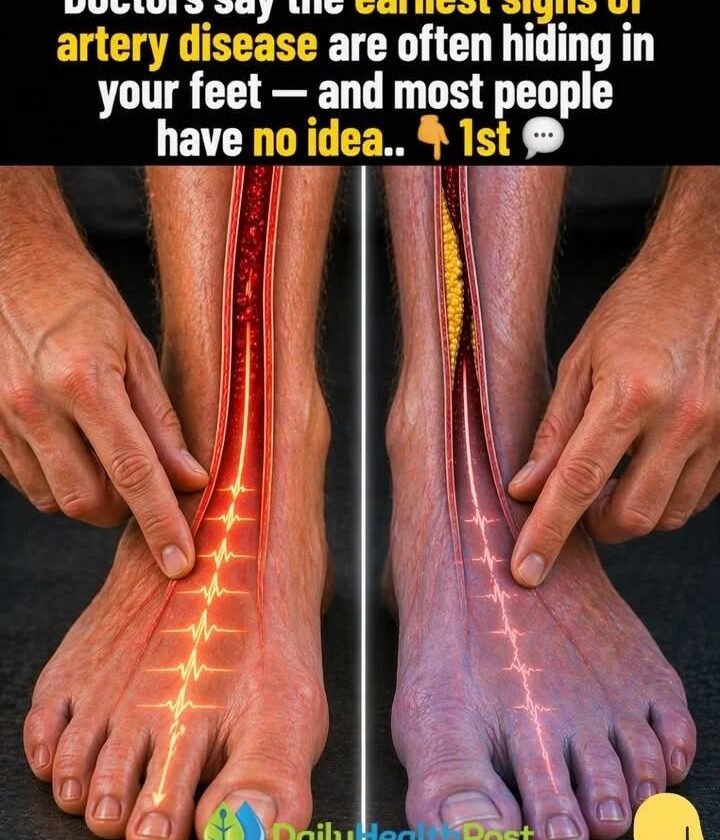
Unlike the sensational clickbait headlines we’ve looked at, this topic actually highlights a very real and clinically important medical connection! Your feet are far away from your heart, which means they are often the first place to show signs when circulation or arterial health begins to struggle.
What Your Feet Can Reveal About Your Arteries
When arteries harden or narrow due to plaque buildup—a condition known as peripheral artery disease (PAD) or atherosclerosis—blood flow to your lower extremities is restricted. Here are the key signs your feet might give you regarding your arterial health:
-
Intermittent Claudication (Cramping with Movement):
-
What it feels like: Pain, cramping, or fatigue in your calves, thighs, or feet that occurs when you walk or exercise, but completely goes away after a few minutes of rest.
-
What it means: Your leg muscles aren’t getting enough oxygen-rich blood during exertion because narrowed arteries can’t keep up with the demand.
-
-
Cold Feet or Toes:
-
What it means: If one or both feet consistently feel much colder than the rest of your body, it can indicate poor arterial blood supply reaching the skin and extremities.
-
-
Changes in Skin Color and Texture:
-
What to look for: Skin on the feet or legs that looks pale, shiny, or slightly bluish/purple. If you elevate your feet and they turn pale, but turn red or dusky when lowered, it’s a classic sign of severe circulatory compromise.
-
-
Slow-Healing Sores or Wounds:
-
What it means: Arterial blood carries vital oxygen and nutrients needed for tissue repair. If cuts, scrapes, or ulcers on your feet take weeks or months to heal—or don’t heal at all—it often points to poor blood circulation.
-
-
Weak or Absent Pulses:
-
What it means: A doctor checking the pulses in the top of your foot (dorsalis pedis pulse) or behind your ankle may find them very weak or hard to detect, indicating restricted blood flow through the main arteries.
-
Why Paying Attention Matters
Recognizing these early signs is crucial. Peripheral artery disease is not just a foot or leg issue—it is a strong indicator that plaque buildup is happening in arteries throughout your body, including those leading to your heart and brain, which increases the risk of heart attack and stroke.
If you or someone you know is experiencing persistent foot pain, cramping while walking, or slow-healing sores, it is definitely worth discussing with a doctor or a vascular specialist for a proper evaluation.