Things You Should Never Plug Into A Power Strip
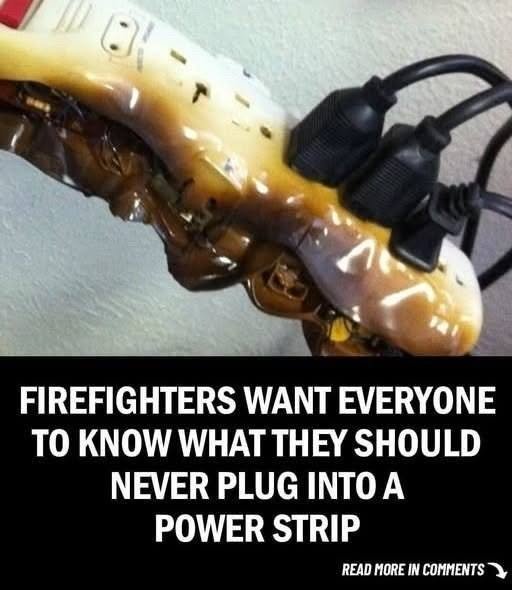
Power strips (and surge protectors) are incredibly convenient for charging phones, plugging in lamps, or grouping your home office equipment. However, treating a power strip like an unlimited electrical outlet is a major fire hazard.
Power strips only distribute the electricity coming out of a single wall outlet; they do not increase the total amount of electrical current that outlet can safely handle. Plugging heavy-duty heating or high-wattage appliances into them can quickly overload the circuit, melt the plastic casing, or cause an electrical fire.
Here are the items you should never plug into a power strip:
1. Refrigerators and Freezers
-
The Danger: Fridges and freezers pull a massive amount of surge power when their compressors kick on. While they might run fine for a short time, the sudden and repeated power demands will easily overload a standard power strip. Furthermore, if the strip trips or gets bumped, your food can spoil without you realizing it.
2. Space Heaters and Portable Air Conditioners
-
The Danger: Heating and cooling appliances are among the highest wattage items in a home, often drawing close to (or exceeding) the total limit of a standard wall circuit. Plugging a space heater into a power strip can cause the internal wiring to overheat rapidly, melting the plastic and sparking a fire within minutes. Always plug space heaters directly into a wall outlet.
3. Coffee Makers and Toasters
-
The Danger: Kitchen appliances that rely on heating elements to function (like toasters, toaster ovens, coffee makers, and microwaves) draw high electrical currents. Grouping these on a power strip creates an instant overload risk.
4. Hair Styling Tools (Blow Dryers, Straighteners, Curling Irons)
-
The Danger: Hair dryers can pull anywhere from 1,200 to 1,800 watts—nearly the entire capacity of an average household circuit on their own. Using them through a power strip (especially in a humid bathroom) is a recipe for tripped breakers or melted equipment.
5. Other Power Strips (Known as “Daisy Chaining”)
-
The Danger: Connecting one power strip into another to reach an outlet further away is a severe fire hazard. This multiplies the electrical resistance across the chain, causing wires to overheat drastically under even a moderate load.
Golden Rules for Safe Power Strip Usage
-
Check the Rating: Ensure your power strip has a built-in circuit breaker (which trips automatically if overloaded) rather than just a simple on/off switch.
-
Plug Directly into the Wall: Any appliance that generates heat, has a heavy-duty motor, or draws high wattage should always be plugged directly into a wall outlet.
Safety Reminder: If a power strip feels warm or hot to the touch, or if you notice a faint burning plastic smell near an outlet, unplug everything immediately and have an electrician inspect the circuit.