The Foolproof Visual Guide to Picking the Sweetest Watermelon
Forget knocking, thumping, or guessing in the grocery aisle. Watermelons actually leave clear, visual clues on their rinds that tell you exactly how sweet, ripe, and juicy they are before you ever cut into them.
Here are the 4 key visual signs to look for to pick the absolute sweetest watermelon every single time:
1. Look for the Field Spot (The Deeper Yellow, the Sweeter)
-
What it is: The creamy yellow or orange patch on the bottom of the watermelon where it rested on the ground while growing.
-
What to look for: A deep, creamy yellow or golden-orange spot. This means the melon spent plenty of time ripening in the sun on the vine.
-
What to avoid: A white or pale green field spot. That indicates the watermelon was picked too early and will likely be bland and underripe.
2. Spot the Sugar Webbing (The Brown, Web-like Scars)
-
What it is: The dark, web-like, rough brown lines or spots on the rind (sometimes called “sugar spots” or bee stings).
-
What to look for: A heavy, prominent web pattern. These marks show where bees repeatedly touched the sugar-containing pollination sites on the flower. More bee visits mean sweeter nectar was drawn into the fruit.
-
What to avoid: A completely smooth, unblemished rind. While pretty to look at, it often means the melon lacks the concentrated sweetness of a webbed one.
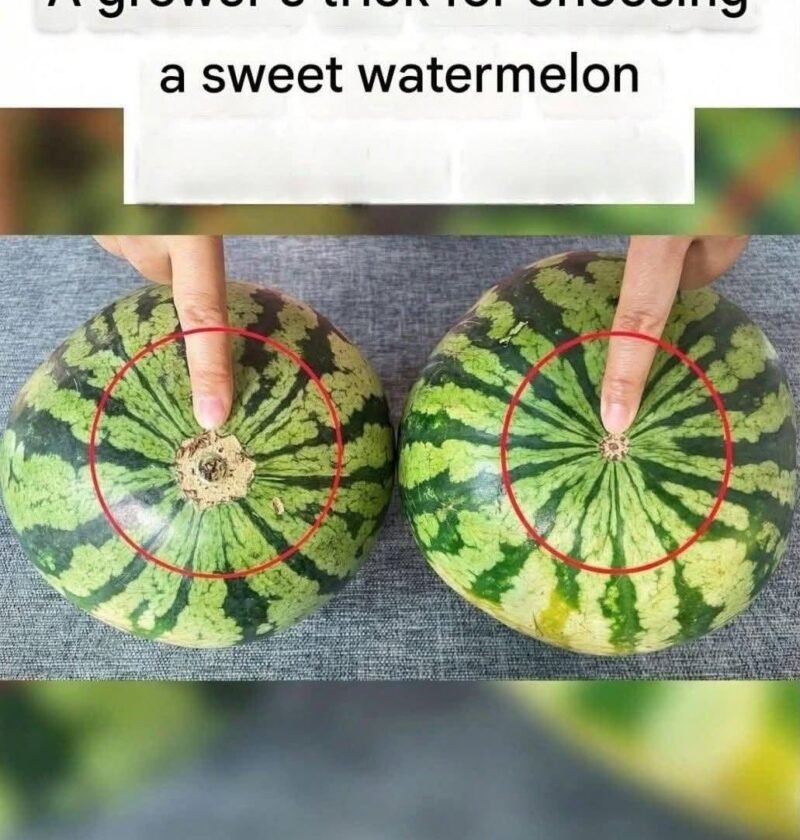
3. Check the Stem (Dry and Yellow vs. Green)
-
What it is: The small tail or stem where the watermelon attached to the vine.
-
What to look for: A brown, dry, and shriveled stem. This is a foolproof sign that the watermelon naturally stopped growing because it reached full ripeness on its own time.
-
What to avoid: A bright green, stiff stem. A green tail means it was harvested prematurely and won’t ripen any further once it’s off the vine.
4. Judge the Finish (Dull and Matte vs. Shiny)
-
What it is: The overall texture and sheen of the watermelon’s outer skin.
-
What to look for: A dull, matte finish. A ripe watermelon should look slightly powdery or dull.
-
What to avoid: A shiny, glossy skin. A bright sheen is a strong visual indicator that the melon is immature and hasn’t finished developing its sugars.
Pro Tip: Size matters, too! Pick up a few watermelons of the same size and compare their weight. A ripe watermelon is about 92% water, meaning it should feel surprisingly heavy for its size—a heavy melon is a juicy melon.
Do you usually go for massive, heavy watermelons, or do you prefer smaller, easier-to-manage personal sizes?