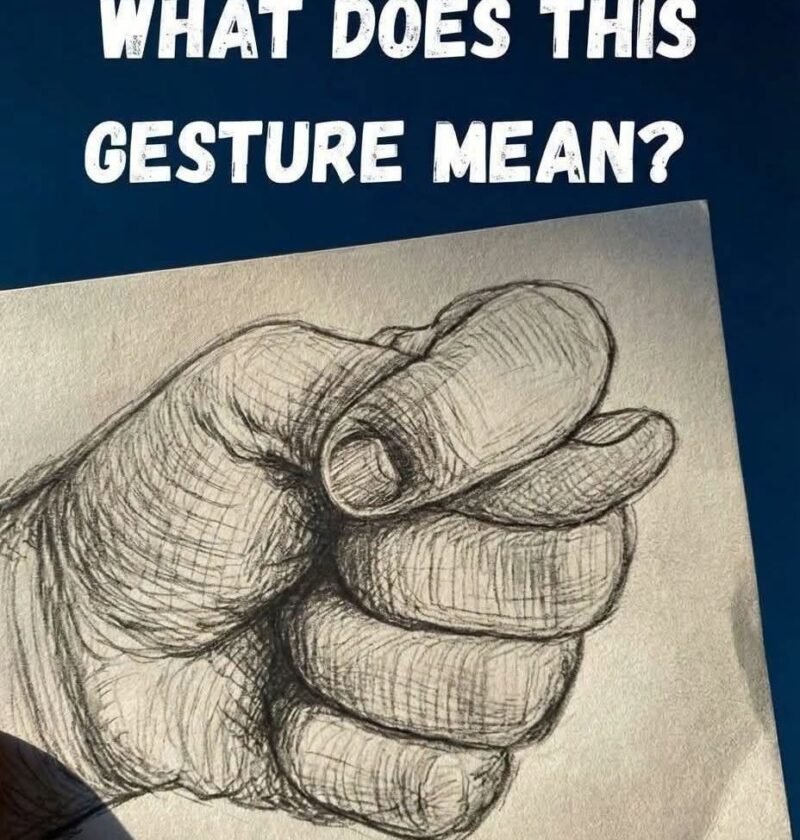
If you’re referring to the “fig sign” or “mano fica”—a hand gesture made by putting the thumb between the index and middle fingers—it has a surprisingly long and complicated history.
🤞 What does it mean?
The gesture is very old and its meaning has changed across cultures and periods.
Ancient Mediterranean cultures: The gesture was associated with fertility and sexuality and was sometimes connected with protection against evil or the “evil eye.”
Ancient Rome: It was known as manus fica (“fig hand”) and could have insulting, sexual, or protective meanings depending on context.
Later European traditions: It continued to be used as a vulgar or obscene gesture in some cultures, while in others it acquired superstitious or protective meanings.
Modern usage: In some countries it remains an obscene gesture, while elsewhere it can be used playfully or simply have no particular meaning.
Why the “fig” connection?
The gesture resembles a fig, with the thumb representing one part of the sexual symbolism and the fingers forming another. The symbolism is generally understood as related to fertility and sexual imagery, although interpretations varied considerably across cultures.
An important caution
There isn’t one universal “hidden meaning.” Hand gestures are strongly dependent on culture, historical period, and context. A gesture that is protective or playful in one country can be offensive in another.
So if you saw a social-media post claiming that this gesture has one secret meaning dating back thousands of years, that’s probably an oversimplification. Its history is real, but its meaning has changed considerably over time.