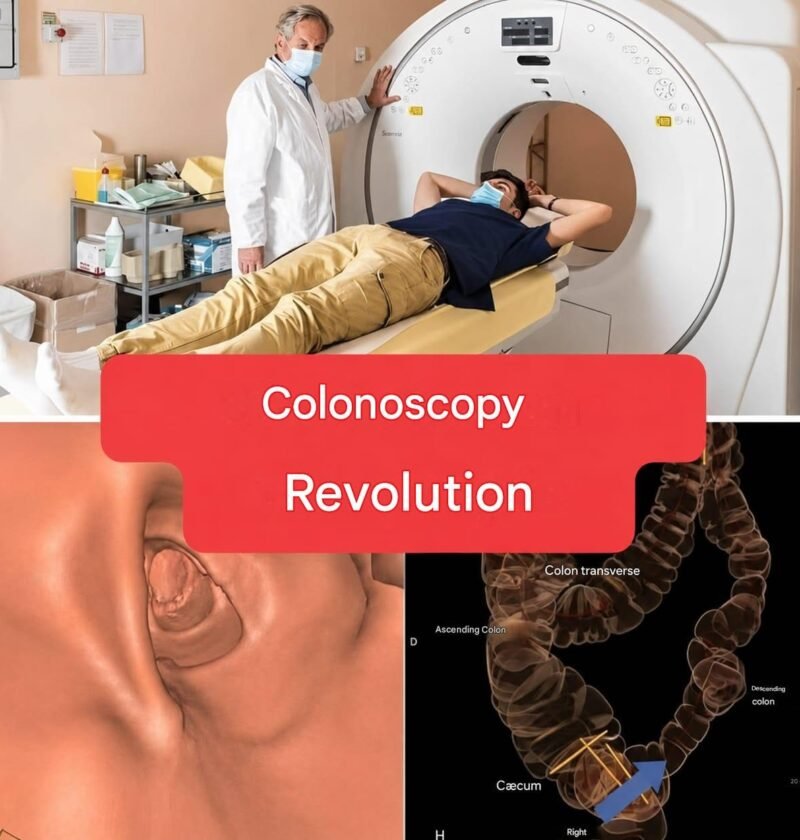
New Methods Could Make Colon Screening Less Invasive (1/2)
Imagine being able to check the colon without undergoing a traditional invasive procedure.
Researchers are developing and improving less-invasive colorectal screening technologies, including stool-based tests and capsule-based imaging. These approaches could make screening more convenient for some people and may help increase participation in colorectal cancer screening.
🔬 How is traditional colonoscopy different?
A conventional colonoscopy uses a flexible camera to examine the entire colon. One major advantage is that doctors can remove polyps or take biopsies during the same procedure if they find something concerning.
That ability is one reason colonoscopy remains an important diagnostic and treatment tool.
💊 What about newer approaches?
Some screening methods don’t require a traditional scope. For example, certain stool tests look for signs associated with colorectal cancer, while capsule-based approaches use a swallowable camera to capture images as it travels through the digestive tract.
However, these methods don’t automatically replace colonoscopy. If a screening test finds something abnormal, a conventional colonoscopy may still be needed to investigate further and potentially remove a polyp.
🌟 Why is this important?
Colorectal cancer is often preventable or more treatable when detected early. Making screening easier and more acceptable could encourage more people to get tested.
So the future may bring more comfortable and convenient options, but it’s not accurate to say that traditional colonoscopy has already become obsolete.