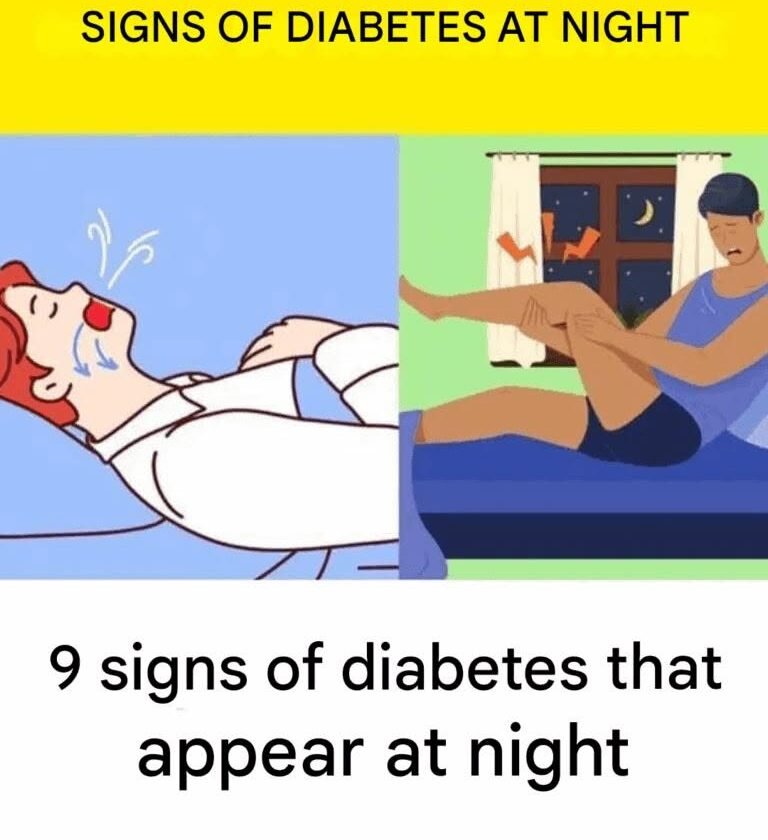
If you mean the headline “9 Signs of Diabetes That Appear at Night,” there is some truth behind it—but most of these are general diabetes symptoms that may become noticeable at night, rather than nine symptoms unique to nighttime.
9 possible nighttime clues
- Waking up repeatedly to urinate
High blood glucose can cause increased urination, including during the night. - Being unusually thirsty at night
Increased urination can lead to fluid loss and persistent thirst. - Night sweats
In someone taking insulin or certain diabetes medicines, sweating during sleep can be a sign of low blood sugar (hypoglycemia). - Shaking or trembling during the night
This can also occur with low blood glucose. - Waking hungry or feeling intensely hungry
Hunger can accompany hypoglycemia. - Burning, tingling, or pain in the feet
Diabetic peripheral neuropathy can cause burning, pins-and-needles, numbness, or sharp pain. These symptoms can be particularly troublesome at night. - Difficulty sleeping
Frequent urination, thirst, high or low glucose, and nerve symptoms can interfere with sleep. - Dry mouth or persistent thirst
Ongoing excessive thirst is a recognized diabetes symptom, although dehydration and many other conditions can cause it too. - Feeling unusually tired the next day
Fatigue is a common symptom of diabetes and can also result when nighttime symptoms repeatedly disrupt sleep.
⚠️ The important part
Having one of these symptoms doesn’t mean you have diabetes. Many have other explanations. Also, type 2 diabetes can exist for years without obvious symptoms.
If you repeatedly experience nighttime urination + excessive thirst + unexplained weight loss or unusual fatigue, it’s sensible to have your blood glucose checked. Diabetes is diagnosed with blood testing, not by symptoms alone.