🌙 This Is Why We Get Cramps at Night
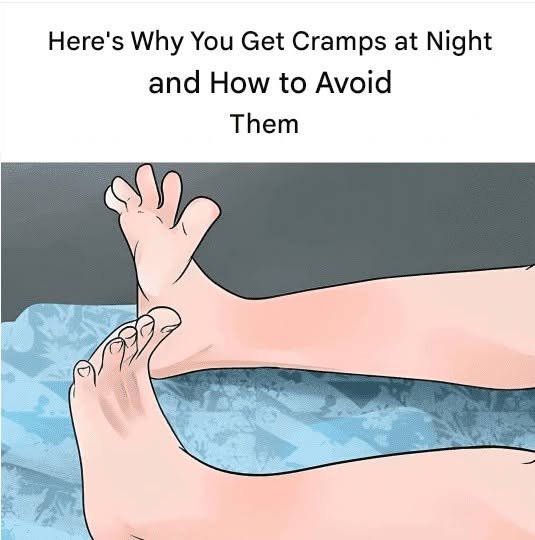
Nighttime leg cramps are sudden, involuntary muscle contractions, most often in the calf, foot, or thigh. They’re common and usually harmless, but they can be extremely painful. (Mayo Clinic)
Why do they happen?
Often, there isn’t one identifiable cause. Factors that may contribute include:
- 💧 Dehydration
- 🦵 Muscle fatigue or overuse
- 🪑 Sitting or remaining in one position for long periods
- 👵 Getting older
- 💊 Certain medicines, including some diuretics and blood-pressure or cholesterol medicines
- 🩸 Circulation problems
- 🧠 Nerve problems, including diabetic neuropathy
- 🧪 Certain metabolic conditions, including kidney or thyroid problems. (Mayo Clinic)
It’s often claimed that nighttime cramps automatically mean you’re deficient in magnesium, potassium, or calcium. That’s not necessarily true. Don’t start high-dose supplements simply because you have cramps; the underlying cause needs to be considered.
🦶 What to do when a cramp strikes
Try to gently stretch the cramped muscle. For a calf cramp, straighten the leg and pull your toes toward your face. Standing and putting weight on the affected leg, gentle massage, or warmth from a shower or bath may also help. (Mayo Clinic)
🌙 How to reduce nighttime cramps
- Stay adequately hydrated during the day.
- Gently stretch your calves before bed.
- Consider a few minutes of light exercise before bedtime.
- Avoid prolonged inactivity when possible.
- Make sure your footwear provides good support. (Mayo Clinic)
🚨 When cramps deserve medical attention
Talk with a healthcare professional if cramps regularly disturb your sleep, are becoming frequent or severe, last more than about 10 minutes, or occur with swelling, numbness, persistent pain, or muscle weakness. (Mayo Clinic)
Bottom line: Night cramps aren’t necessarily a sign that your body is missing one particular vitamin or mineral. Muscle fatigue, nerve activity, dehydration, medications, age, and underlying health conditions can all play a role.