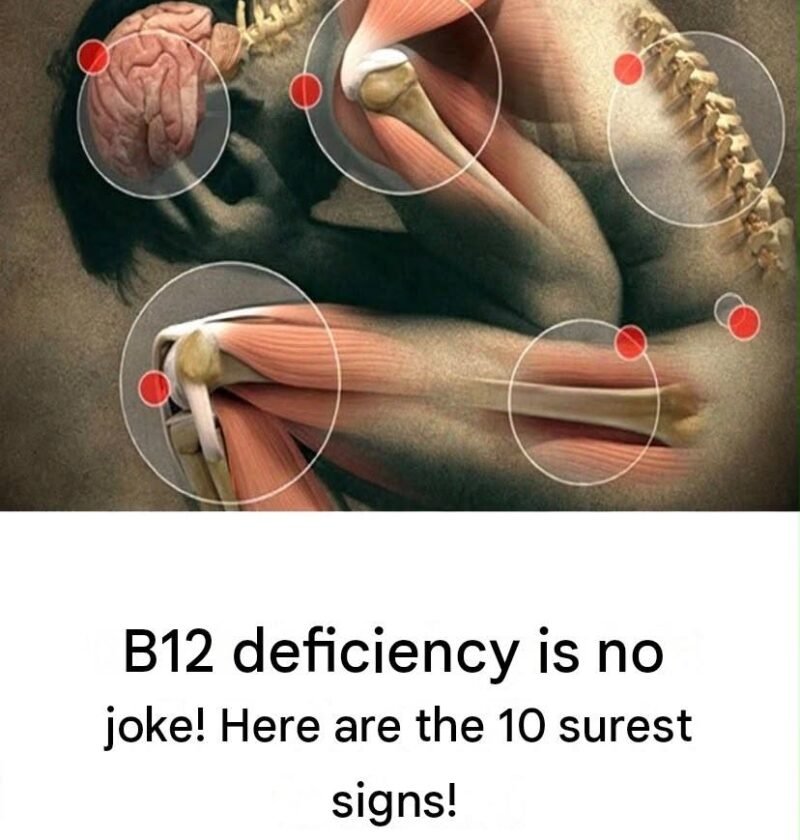
10 Common Warning Signs of Vitamin B12 Deficiency
-
Pins and Needles (Paresthesia): Tingling, numbness, or electric-shock sensations—most often starting in the hands, feet, or toes—caused by thinning of the protective myelin sheath around nerves.
-
Persistent Fatigue and Weakness: Without enough B12, the body cannot make healthy, normal-sized red blood cells to carry oxygen efficiently (megaloblastic anemia), leaving you exhausted even after full sleep.
-
Pale or Slightly Yellowish Skin: Fragile, oversized red blood cells break down easily, releasing bilirubin that gives skin a pale or mild jaundiced tint.
-
Difficulty Walking or Loss of Balance: Nerve damage in the spinal cord and peripheral nerves can impair proprioception, causing stumbling, unsteadiness in the dark, or muscle weakness.
-
Memory Slips and “Brain Fog”: Trouble concentrating, forgetfulness, slowed thinking, or confusion—which in older adults is frequently mistaken for early dementia.
-
Sore, Smooth, or Red Tongue (Glossitis): The tongue can become swollen, smooth (losing its tiny bumps/papillae), and painful, often alongside recurring mouth ulcers or burning sensations.
-
Shortness of Breath and Dizziness: Climbing stairs or light exertion triggers breathlessness, lightheadedness, or a rapid heartbeat as the body tries to compensate for low oxygen delivery.
-
Mood Changes (Irritability or Low Mood): Low B12 disrupts neurotransmitter synthesis (serotonin and dopamine), contributing to unexplained irritability, apathy, or depressive symptoms.
-
Blurred or Disturbed Vision: Rare, but prolonged deficiency can damage the optic nerve, leading to gradual visual blurring or loss of sharpness.
-
Cold Hands and Feet: Poor oxygen delivery and mild peripheral nerve changes often make extremities feel persistently cold.
Who Faces the Highest Risk?
-
Adults over 50: Stomach acid naturally decreases with age, making it harder to release B12 bound to food proteins.
-
Vegans and strict vegetarians: B12 is naturally present almost exclusively in animal products (meat, fish, eggs, dairy) unless obtained from fortified foods or supplements.
-
Long-term users of certain medications: Metformin (for diabetes) and acid-suppressing drugs like proton pump inhibitors (omeprazole, pantoprazole) or H2 blockers reduce intestinal B12 absorption over time.
-
People with digestive conditions or stomach surgery: Celiac disease, Crohn’s disease, pernicious anemia (an autoimmune lack of intrinsic factor), or gastric bypass surgery block absorption.