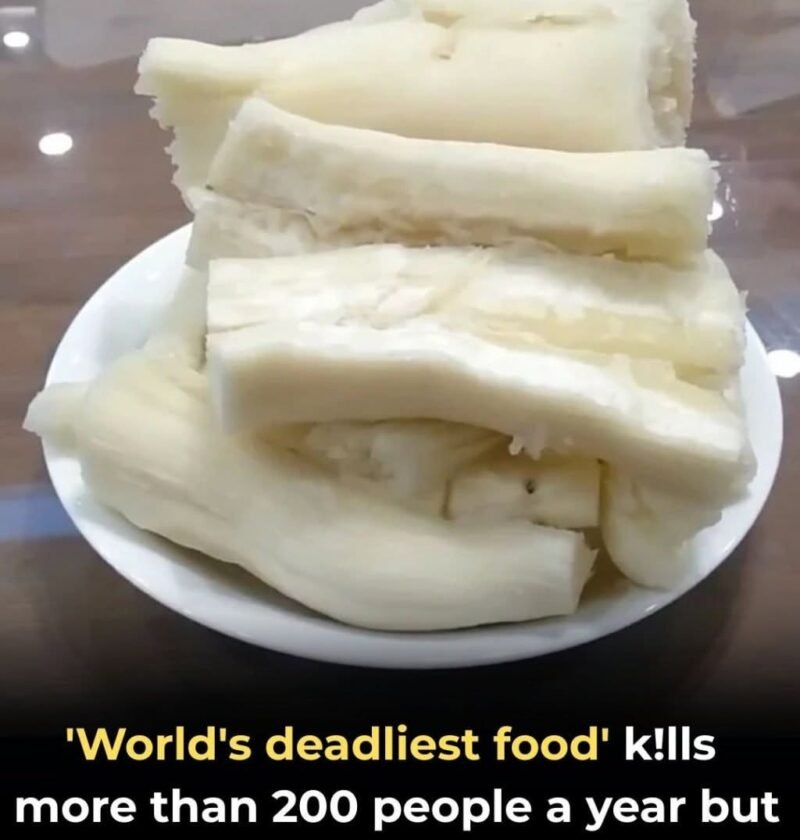
The food in this headline is cassava (manioc/yuca). The headline is based on a real safety issue, but “world’s deadliest food” is sensationalized.
🌱 Why can cassava be dangerous?
Cassava naturally contains cyanogenic glycosides, particularly in some bitter varieties. When the plant is damaged or processed, these compounds can release hydrogen cyanide. Eating cassava that has not been properly processed can therefore cause cyanide poisoning. (CDC)
Severe poisoning can cause vomiting, dizziness, rapid breathing, loss of consciousness, neurological injury and, in some cases, death. (CDC)
🍽️ So why do hundreds of millions eat it?
Because properly processed cassava is an important food and is generally safe. Cassava is a major staple in tropical regions and provides calories for hundreds of millions of people. (ScienceDirect)
Traditional processing methods—depending on the variety and product—can include peeling, soaking/fermenting, drying and thorough cooking, which reduce cyanogenic compounds. (CDC)
⚠️ The important warning
Don’t experiment with raw or inadequately processed cassava, particularly bitter/wild varieties. Proper preparation matters, and different cassava products require different processing methods.
There have been documented outbreaks of cassava-related cyanide poisoning; for example, a 2017 outbreak in Uganda involved 98 cases and two deaths after contaminated cassava flour was consumed. (CDC)
Bottom line: Cassava isn’t inherently a “deadly food.” It’s a nutritious staple when appropriately processed, but improperly prepared cassava can contain enough cyanide-producing compounds to cause serious or fatal poisoning. The “200 deaths and 500 million eat it” figures are commonly repeated online, but the global burden is difficult to measure accurately. (livescience.com)