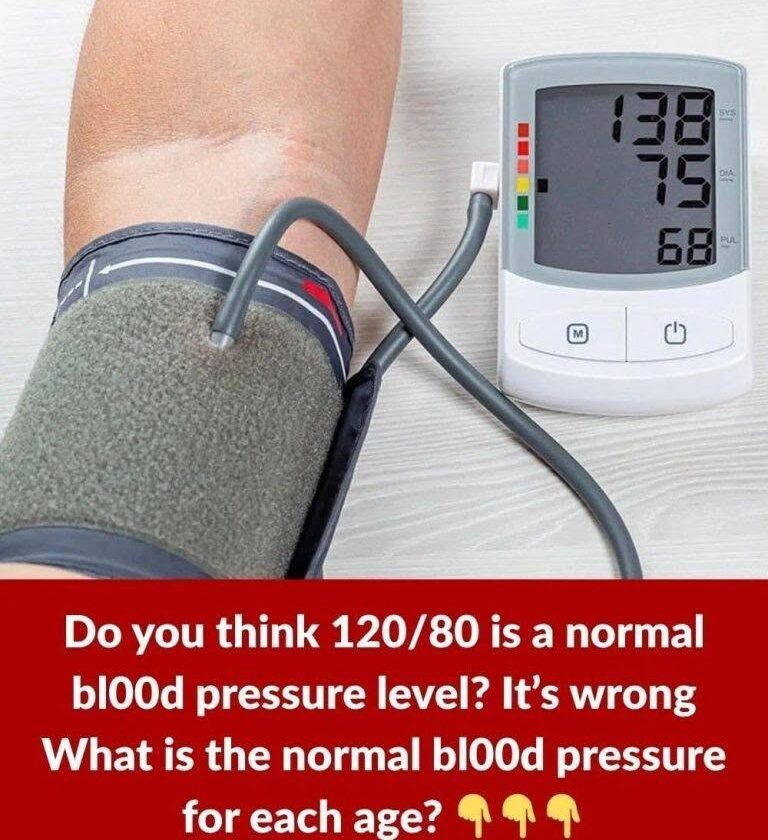
What Is Normal Blood Pressure at Each Age?
A common online claim is that “normal blood pressure increases with age.” That’s not quite right. For adults, current U.S. guidelines use the same blood-pressure categories regardless of age.
Adults: the current categories
| Blood pressure | Category |
|---|---|
| Below 120/80 mmHg | ✅ Normal |
| 120–129 / below 80 | Elevated |
| 130–139 or 80–89 | Stage 1 hypertension |
| 140 or higher or 90 or higher | Stage 2 hypertension |
The 2025 American Heart Association/American College of Cardiology guideline recommends an overall treatment goal of below 130/80 mmHg for adults, although the appropriate target can differ for some individuals.
👴 What about people over 65 or 70?
There isn’t a special “normal” number such as 150/90 for someone aged 70 simply because they’re older. A reading of 145/85, for example, is still above the normal range.
However, treatment decisions should consider the person’s overall health, other medical conditions, medications, frailty, and risk of side effects.
👶 Children are different
For children, blood pressure isn’t interpreted using the adult table. Normal ranges depend on age, sex and height, so a child’s reading needs to be assessed using pediatric reference values.
📏 How to measure it correctly
For a more reliable home reading:
- Sit quietly for 5 minutes first.
- Keep your back supported and feet flat on the floor.
- Rest your arm at heart level.
- Don’t talk during the measurement.
- Take two readings about one minute apart and record them.
One high reading doesn’t automatically mean you have hypertension. Repeated measurements over time are much more useful.
🚨 When is it dangerously high?
A reading above 180/120 mmHg is severely high. If it occurs with symptoms such as chest pain, shortness of breath, weakness/numbness, vision changes, severe headache, or difficulty speaking, seek emergency medical care immediately.