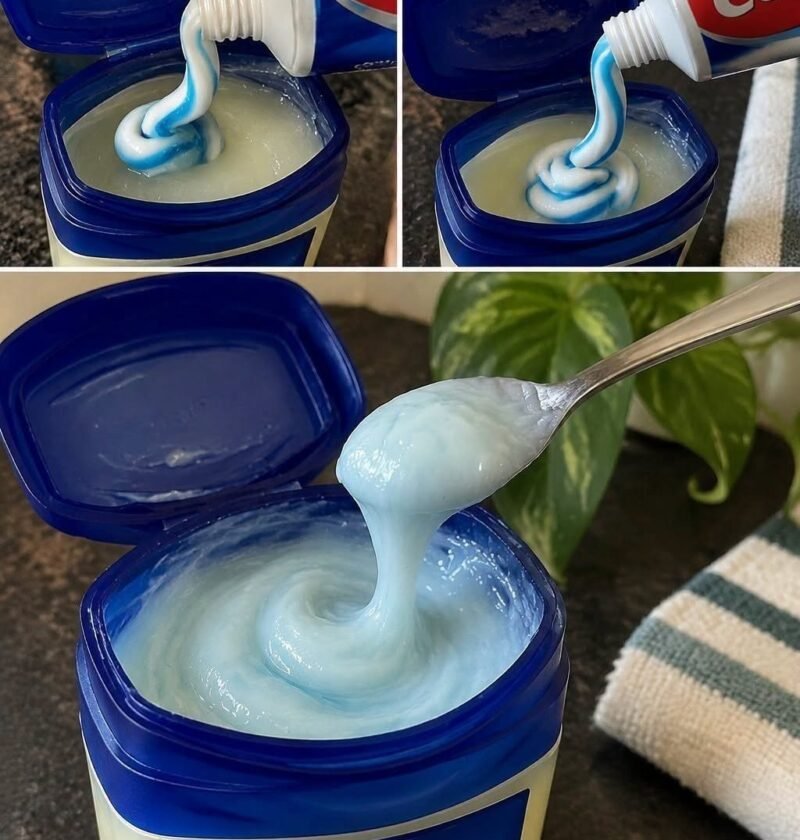
Why Toothpaste + Vaseline Is Problematic
-
Toothpaste is too harsh for skin: Most toothpastes contain sodium lauryl sulfate (SLS) (a strong foaming detergent), hydrated silica or baking soda (abrasives), alcohol, hydrogen peroxide, menthol/peppermint oil, and fluoride. These strip the skin’s protective lipid barrier.
-
Vaseline locks irritants in (occlusion): Pure petroleum jelly is gentle and safe on its own for protecting clean skin, because it forms an inert seal. Mixing it with toothpaste traps harsh surfactants and flavorings against your skin, turning mild irritation into irritant contact dermatitis (redness, stinging, peeling, or tiny bumps).
-
Backfires on acne and dark marks: Instead of clearing blemishes or brightening skin, inflamed skin often reacts with rebound breakouts and post-inflammatory hyperpigmentation (PIH)—darker marks that linger far longer than the original spot.
-
Even riskier on lips, under-eyes, and cracked heels: Thin lip and under-eye skin burns and peels easily, while trapping non-sterile toothpaste inside deep heel cracks can worsen fissuring and invite infection.
-
Messy as a household polish: If used on shoes, headlights, or metal scuffs, the petroleum jelly leaves a greasy residue that attracts dust and stains clothing—while any mild buffing comes purely from the toothpaste’s abrasives.
Safe, Effective Alternatives That Actually Work
| Goal | What to Use Instead | Why It Works Better |
| Active pimples | Hydrocolloid pimple patch, 2.5%–5% benzoyl peroxide, or 0.5%–2% salicylic acid | Targets clogged pores and acne bacteria cleanly without burning surrounding skin. |
| Chapped lips or dry skin | Plain Vaseline alone (applied over damp skin or a plain fragrance-free balm) | Seals in moisture safely without irritating detergents or menthol. |
| Thick, cracked heels | 10%–20% urea or salicylic acid foot cream, topped with plain Vaseline at night | Gently dissolves thickened dead skin while locking in hydration. |
| Household scuff marks | Plain baking soda + water paste or a damp melamine sponge (wiped clean afterward) | Buffs scuffs without leaving a greasy petroleum film behind. |
When to see a doctor or dermatologist: Seek medical care if a DIY skin mixture causes blistering, severe burning, swelling, oozing, or a spreading rash, or if persistent acne, pigmentation, or deep heel fissures do not improve with gentle over-the-counter care.