White spots that appear or become more noticeable in the summer are very common and usually stem from sun-induced pigment contrast, superficial yeast overgrowth, or minor sun damage. Because each cause requires a completely different treatment—and some remedies for one can worsen another—identifying the specific pattern is the essential first step.
1. Tinea Versicolor (Superficial Yeast Overgrowth)
This is the most frequent culprit behind summer white spots, especially in warm, humid weather. A harmless yeast that naturally lives on human skin (Malassezia) overgrows in sweat and oil, producing an acid that temporarily bleaches the surrounding pigment.
-
What it looks like: Small, flat, slightly scaly patches (white, pink, or light tan) that often merge into larger irregular blotches on the chest, back, shoulders, or neck. They become much more obvious when the surrounding healthy skin tans.
-
Treatment:
-
Over-the-counter (OTC) washes: Use a dandruff shampoo containing selenium sulfide (2.5%) or ketoconazole (1%–2%) as a body wash. Apply it to the affected areas, leave it on for 5 to 10 minutes before rinsing, and repeat daily for 1 to 2 weeks.
-
Antifungal creams: Topical clotrimazole or miconazole applied twice daily for 2 weeks works well for smaller patches.
-
Prescription options: For widespread or stubborn cases, a dermatologist may prescribe a short course of oral antifungal medication (such as fluconazole).
-
Important note: Even after the yeast is cleared, normal skin color takes several weeks to a few months to return.
-
2. Idiopathic Guttate Hypomelanosis (“Sun Spots”)
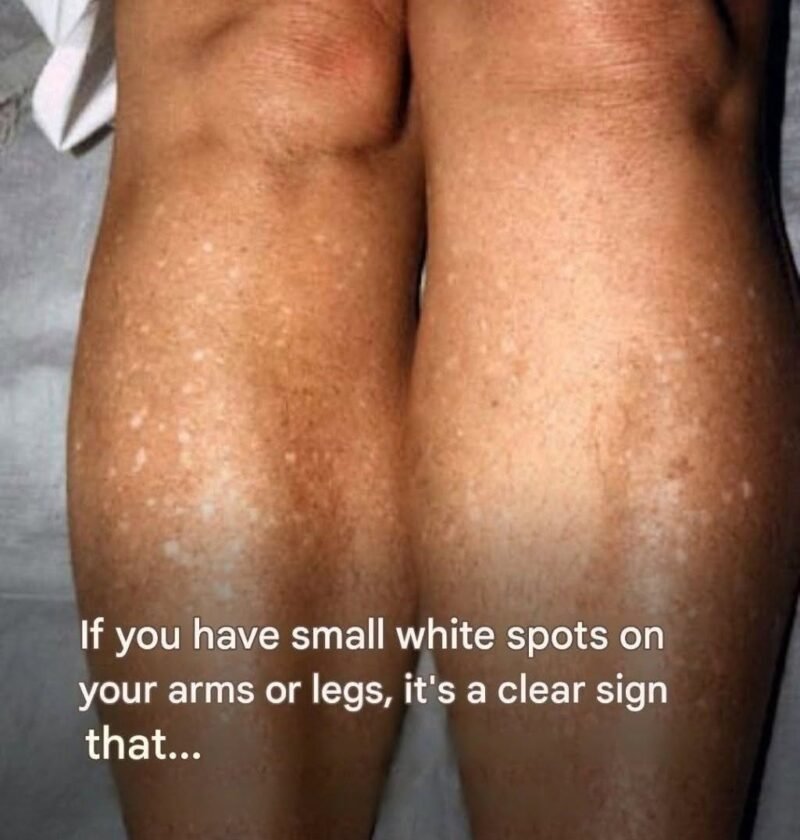
These are tiny, benign white dots caused by cumulative ultraviolet (UV) exposure over the years, which locally reduces pigment-producing cells (melanocytes).
-
What it looks like: Smooth, flat, porcelain-white circular spots—usually 2 to 5 millimeters wide (like tiny raindrops)—found on sun-exposed areas such as the shins, forearms, and upper chest. They are most common in adults over 40, though they can appear earlier with heavy sun exposure.
-
Treatment:
-
These spots are completely harmless and do not require medical treatment.
-
Strict daily sunscreen (SPF 30+) prevents new spots from forming and stops surrounding skin from darkening, which reduces the visual contrast.
-
For cosmetic improvement, a dermatologist may offer targeted treatments such as topical retinoids, cryotherapy (light freezing), or laser therapy, though results vary.
-
3. Pityriasis Alba (Mild Eczema-Related Dryness)
Often seen in children, teens, and young adults—particularly those with dry skin, allergies, or a history of eczema—this condition involves low-grade inflammation that temporarily reduces pigment production.
-
What it looks like: Round or oval patches with faint, indistinct borders and very fine dry flaking, most commonly on the cheeks, upper arms, and shoulders. Summer sun tans the rest of the face, making the pale patches stand out.
-
Treatment:
-
Gentle skincare and heavy moisturizing: Switch to a fragrance-free cleanser and apply a thick, ceramide-rich moisturizer twice daily.
-
Mild anti-inflammatory creams: A short course of OTC 1% hydrocortisone cream (used for up to 1–2 weeks) or a prescription non-steroidal cream (such as pimecrolimus or tacrolimus) can calm the underlying dryness so pigment gradually recovers.
-
4. Vitiligo (Autoimmune Pigment Loss)
Unlike the conditions above, vitiligo occurs when the immune system mistakenly attacks pigment-producing cells, causing complete loss of melanin rather than mild lightening.
-
What it looks like: Chalk-white patches with sharp, well-defined borders and no scaling. They frequently appear symmetrically on the hands, wrists, around the eyes or mouth, elbows, or knees, and become stark against tanned summer skin.
-
Treatment:
-
Vitiligo requires evaluation by a dermatologist. First-line therapies include prescription topical corticosteroids, calcineurin inhibitors (tacrolimus), topical JAK inhibitors (ruxolitinib cream), and narrowband UVB phototherapy to stimulate repigmentation.
-
Daily Habits to Prevent Summer Contrast
-
Apply broad-spectrum SPF 30 or higher daily: Protecting your skin from UV rays prevents healthy skin from tanning deeply, which is what makes pale spots stand out most dramatically.
-
Shower promptly after sweating: Rinse off sweat and apply breathable, loose cotton clothing in hot weather to discourage Malassezia yeast overgrowth.
-
Avoid harsh scrubbing or bleaching creams: Scrubbing irritates dry patches (worsening pityriasis alba), and skin-lightening products can damage surrounding healthy pigment.
When to See a Dermatologist
Schedule an in-person skin exam if:
-
Spots do not start fading after 2–3 weeks of over-the-counter antifungal or moisturizing care.
-
The patches are completely chalk-white with sharp edges (to rule out vitiligo).
-
A spot is raised, thick, itchy, bleeding, or changing in size or shape.