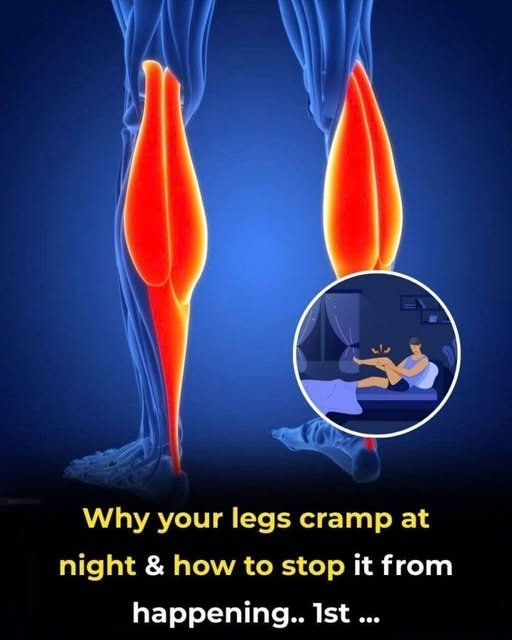
There are few things as jarring as waking up from a deep sleep to a sudden, agonizing knot in your calf. The muscle seizes up so tightly that it feels locked in place, leaving soreness that can linger long after the spasm passes.
While nocturnal leg cramps (frequently called “charley horses”) are brief, understanding why they happen reveals a fascinating intersection of neurology, muscle mechanics, and sleep physiology.
The Core Mechanism: Why Muscles Seize at Night
At its core, a cramp is an involuntary, painful, and sustained contraction of a skeletal muscle. During sleep, a combination of structural and neurological factors creates the “perfect storm” for these spasms:
1. The Shortened Position of Calf Muscles
By far the most common site for night cramps is the calf muscle (gastrocnemius), followed by the hamstrings and the muscles in the sole of the foot.
-
The Mechanic’s Clue: When you sleep on your back or side with your toes pointed downward (plantarflexion), your calf muscles and Achilles tendons are pushed into a shortened, relaxed position for hours.
-
The Misfire: When a muscle remains shortened, it is physically primed to contract too far if a sudden nerve signal triggers it. A simple stretch—like pointing your toes when rolling over—can trip a reflex that causes the muscle fibers to spasm uncontrollably instead of releasing.
2. Neuromuscular Fatigue and Nerve Miscommunication
Your nervous system constantly communicates with your muscles to balance tension. However, when muscles are fatigued from intense daytime exertion, prolonged standing, or unaccustomed exercise, the nervous system’s regulatory feedback loop gets tired.
-
The spinal reflex arcs that normally tell a muscle when to relax fail to fire correctly, allowing the muscle to stay locked in a state of hyper-contraction.
3. Age-Related Loss of Motor Neurons
As noted in demographic studies on night cramps, older adults experience them much more frequently. As we age, our bodies gradually lose some of the spinal motor neurons that control muscle fibers. The remaining neurons take over larger groups of fibers, making them more prone to erratic, uncoordinated firing patterns, especially during periods of rest.
4. Fluid Shifts and Electrolyte Changes
While severe electrolyte imbalances (such as dangerously low potassium, magnesium, or calcium) usually cause widespread muscle twitching, minor fluctuations in body water distribution during sleep can increase nerve sensitivity. As you lie flat for hours, fluids shift throughout your body, and if you are even mildly dehydrated, your nerve endings become hyper-excitable, misinterpreting normal resting states as a trigger to spasm.
How to Stop an Active Cramp Fast
When a night cramp strikes, the immediate goal is to mechanically override the nervous system’s contraction signal:
-
The Counter-Stretch: Immediately pull your toes upward toward your shin (dorsiflexion) and straighten your leg. If you can get out of bed, gently walking around for a minute helps stretch the muscle and reset the nerve reflex.
-
Warmth or Massage: Applying gentle, firm massage to the knotted muscle or placing a warm compress on the area helps relax the muscle fibers and ease blood flow back into the tissue.