As the air turns crisp and indoor heating kicks in, houseplants and indoor flowers often hit a rough patch. Growth stalls, leaves droop, and buds fade as daylight hours shrink. Giving them a successful “fall awakening” requires shifting your care routine to match their autumn rest cycle.
1. Chase the Weakening Autumn Light
Summer sun angles are long gone, meaning your plants might no longer get enough light sitting where they did a few months ago.
-
Relocate sun-lovers: Move flowering plants (like orchids, African violets, or kalanchoes) closer to unshaded south- or west-facing windows to catch every possible minute of light.
-
Clean the leaves: Dust blocks microscopic pores called stomata, reducing the plant’s ability to photosynthesize. Gently wipe down large leaves with a damp cloth.
2. Back Off on the Watering Can
Overwatering is the single most common killer of houseplants in autumn. Because temperatures drop and sunlight wanes, plants enter a semi-dormant state and drink significantly less water.
-
The finger test: Always check the top 2 inches of soil. If it still feels moist, hold off.
-
Prevent root rot: Indoor heating dries the air, but soil stays wet much longer because evaporation slows down indoors. Let the soil dry out further between waterings than you did in summer.
3. Natural Root and Bloom Boosters
When experienced gardeners want to wake up tired autumn plants without burning them with harsh chemical fertilizers, they turn to gentle, nutrient-rich amendments:
-
Banana Peel “Tea” (Potassium Power): Steep banana peels in a jar of water for 24 to 48 hours. The resulting liquid is packed with potassium, which encourages flower bud development and strengthens cell walls. Dilute it before using it to water your plants.
-
Cinnamon as a Natural Fungicide: Because soil stays damp longer in autumn, fungus gnats and mold can appear on the surface. Dusting a light layer of cinnamon powder over the soil discourages pests and stops fungal growth naturally without harming roots.
-
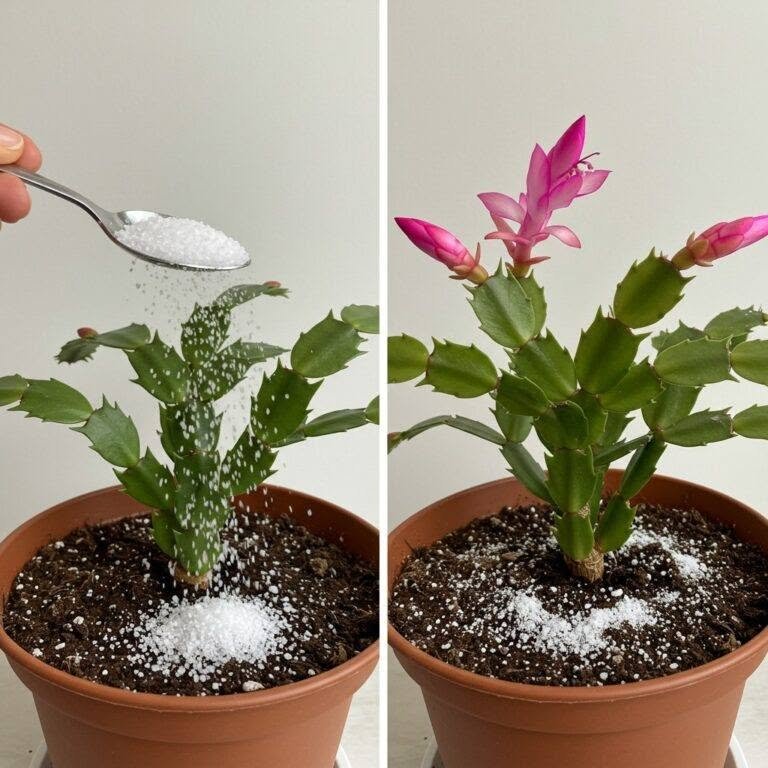
Epsom Salt Tonic (Magnesium & Sulfur): Dissolving a single teaspoon of plain Epsom salt in a gallon of water provides a magnesium boost that helps plants absorb essential nutrients and green up fading foliage.
Pro-Tip: Combat Indoor Dry Air
Central heating pumps out dry air that stresses delicate blooms, causing flower buds to drop before they even open. Group your plants closely together to create a natural microclimate of humidity, or place their pots on a tray filled with pebbles and water (making sure the bottom of the pot never touches the standing water).