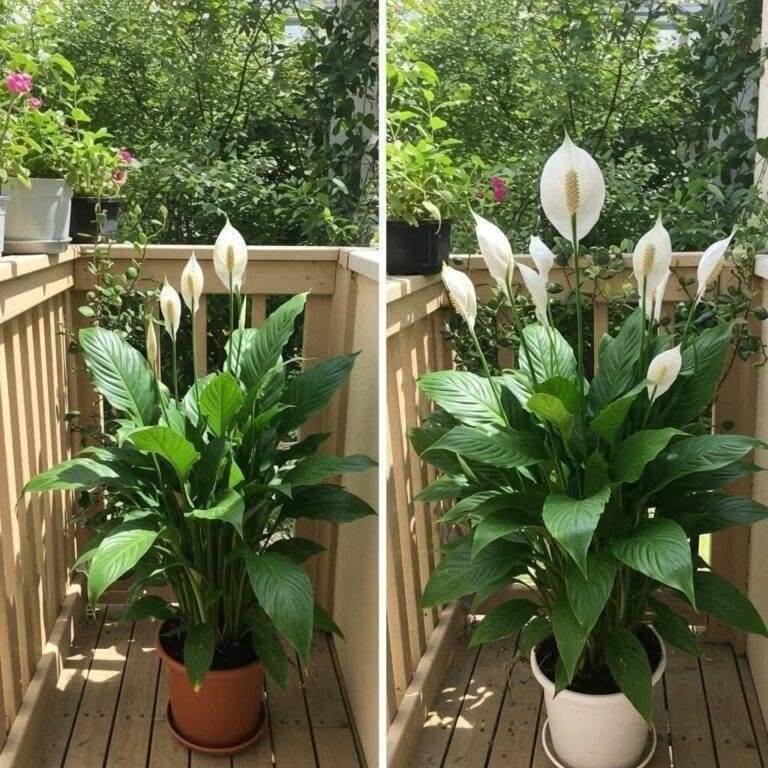
The viral “1-cup trick” circulating online for making stubborn or “ugly” peace lilies burst into blooms typically refers to rice water (or occasionally a weak, diluted coffee/rice-flour tonic).
While it is a popular household hack, getting a peace lily to actually thrive and push out those iconic white flowers (spathes) takes a bit more than just a single cup of kitchen water.
1. The 1-Cup Kitchen Trick (How It Works)
The viral method usually involves:
-
The Rice Water Method: Rinsing 1 cup of uncooked, unseasoned rice in water or blending a small amount of rice flour with water to create a milky, nutrient-rich liquid.
-
The Benefit: This starchy water contains trace amounts of vitamins and minerals (like magnesium and B vitamins) that can give the soil a mild micronutrient boost.
-
How to use it safely: Pour about 1 cup of the unseasoned, plain liquid over the soil roughly once a month during the spring or summer growing season.
-
⚠️ Important Warning: Never use rice water containing salt, oil, or seasonings. Don’t overdo it either—excess starch can sour the soil, attract fungus gnats, or invite pests.
2. How to Fix an “Ugly” or Non-Blooming Peace Lily
If your peace lily is drooping, full of brown tips, or strictly producing green leaves with no flowers, a kitchen trick alone won’t fix it. You need to address the core fundamentals:
-
Tuck it into brighter (indirect) light: The #1 reason peace lilies refuse to bloom is a lack of light. While they survive in dark office corners, they need bright, indirect sunlight (such as near an east-facing window) to trigger flower growth.
-
Prune the “ugly” growth: Use clean shears to snip off completely yellow, dead, or severely damaged leaves right at the base. This stops the plant from wasting energy on dying foliage and redirects it toward fresh new shoots and blooms.
-
Watch out for tap water sensitivity: Peace lilies are notoriously sensitive to the heavy minerals, fluoride, and chlorine found in standard tap water, which causes those frustrating brown leaf tips. Let your tap water sit out overnight before using it, or switch to rainwater if possible.
-
Check for rootbound stress: If roots are circling densely out of the drainage holes, the plant is rootbound and exhausted. Upgrading it to a slightly larger pot with fresh, well-draining potting mix can work wonders.