Vinegar in the Laundry: The Ultimate Guide
Vinegar is often hailed as a miracle laundry booster—and for good reason. It is cheap, eco-friendly, and acts as a natural fabric softener, brightener, and odor neutralizer.
However, because it is an acid, using it incorrectly can damage your clothes and washing machine over time.
Here is why most people use it wrong, along with the right way to harness its power for whiter whites and softer towels.
⚠️ How Most People Get It Wrong (And Why It’s a Problem)
-
Mistake 1: Pouring it directly onto clothes.
-
Why it’s wrong: Undiluted white vinegar is highly acidic (around 5% acetic acid). If it pours directly onto fabrics before being diluted by water, it can weaken natural fibers, cause discoloration, or degrade elastic bands.
-
-
Mistake 2: Mixing it with bleach.
-
Why it’s dangerous: Combining vinegar (an acid) with chlorine bleach creates toxic chlorine gas, which is extremely hazardous to breathe.
-
-
Mistake 3: Using it on every single load.
-
Why it’s a problem: Constant exposure to acid can degrade rubber hoses, seals, and gaskets inside your washing machine, leading to leaks and costly repairs.
-
✅ The Right Way to Use Vinegar in Your Laundry
To safely get all the benefits without the risks, follow these golden rules:
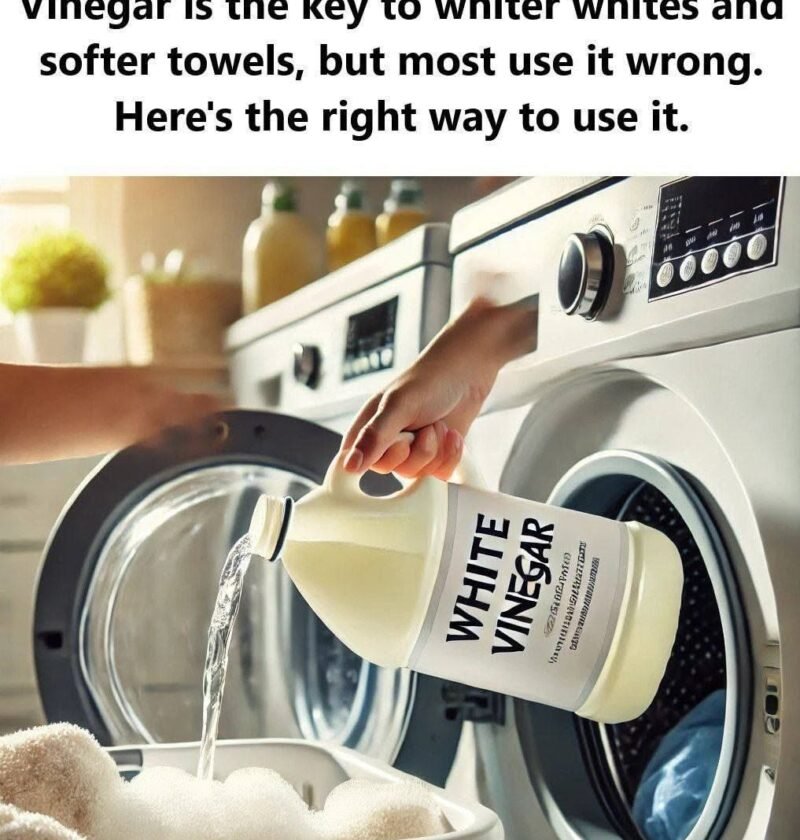
1. Always put it in the fabric softener dispenser
Instead of dumping vinegar straight into the drum, pour 1/2 cup of standard white distilled vinegar into your machine’s liquid fabric softener compartment.
-
How it works: The dispenser automatically releases the vinegar during the rinse cycle, which ensures it is properly diluted with water and effectively washes away residual soap scum (which is what makes towels stiff and dingy).
2. Skip commercial fabric softeners permanently
Commercial softeners coat fibers in a waxy, petroleum-based film that locks in odors and ruins the absorbency of towels and workout gear. Vinegar strips away this buildup naturally, leaving fabrics truly clean, fluffy, and completely odor-free (don’t worry—the vinegar smell disappears completely once the clothes dry).
3. Use it to whiten and brighten whites
Over time, detergent and body oils leave a yellow, dull film on white clothes and sheets.
-
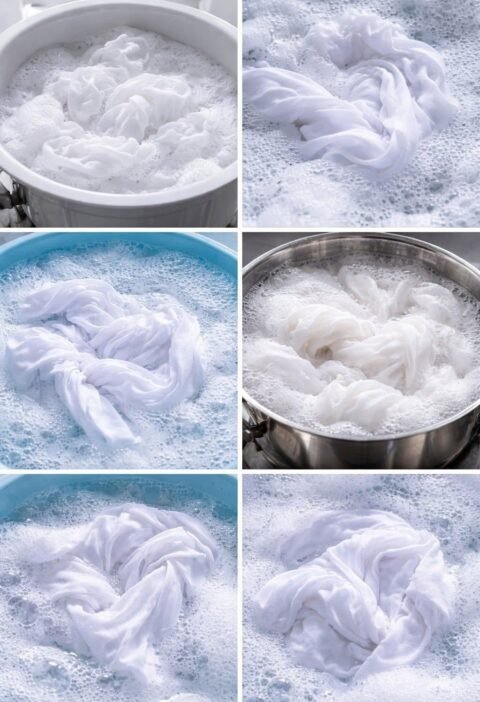
The Method: Add 1/2 cup of vinegar to the rinse cycle, or pre-soak dingy whites in a bucket of warm water mixed with 1 cup of vinegar for 30 minutes before washing normally.
💡 Quick Summary Checklist
| Do This 👍 | Avoid This ❌ |
| Dilute it via the rinse/softener dispenser | Pour it directly onto dry or wet clothes |
| Use white distilled vinegar (avoid apple cider vinegar, which can stain) | Mix it with bleach (creates toxic fumes) |
| Use it occasionally (every few loads) to protect machine seals | Use it on every load or leave it sitting in rubber seals |
What kind of laundry challenge are you tackling right now—stiff towels, stubborn odors, or dingy whites? Let me know and I can give you a tailored routine