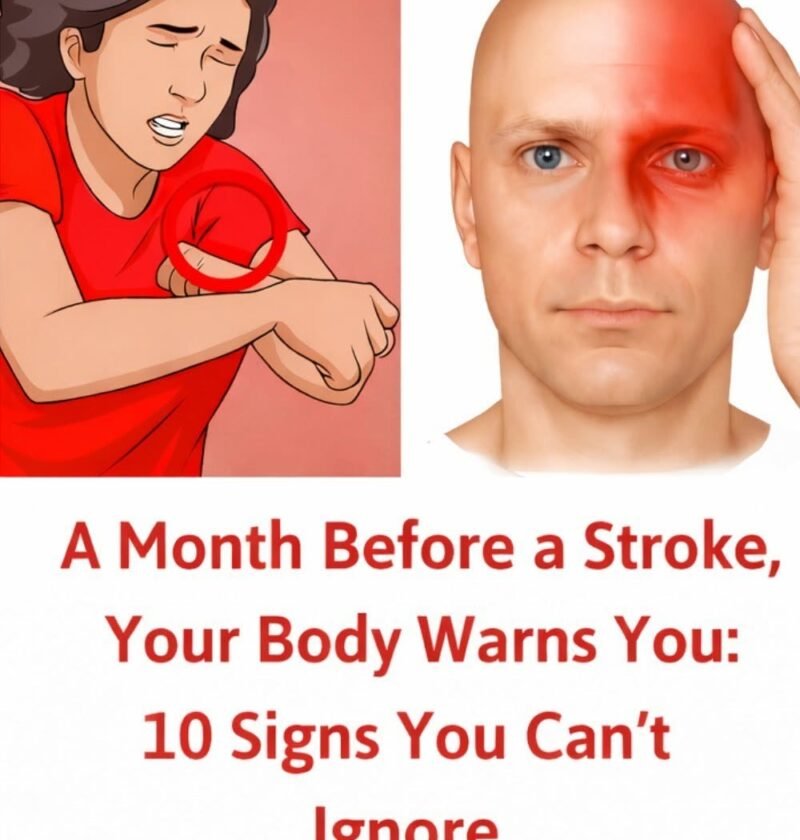
While major strokes typically strike with sudden, dramatic intensity, neurologists note that the underlying vascular stress or minor neurological events can sometimes produce subtle, fluctuating warning signs weeks or even a month in advance.
Chief among these warnings is the Transient Ischemic Attack (TIA)—frequently called a “mini-stroke”. A TIA happens when a temporary blockage restricts blood flow to part of the brain. Unlike a major stroke, the symptoms resolve completely within minutes to hours, causing many people to brush them off. However, a TIA is a critical alarm bell: research shows that a significant percentage of people who experience a TIA go on to have a major stroke, often within days, weeks, or months if left untreated.
Here are 10 early or warning signs that can sometimes precede a stroke weeks in advance, along with what they might signal:
1. Transient Numbness or Weakness
-
What it looks like: A fleeting feeling of heaviness, tingling, or a “pins and needles” sensation, or a mild loss of strength down one side of the body (such as difficulty holding a coffee cup or a subtle drift in one arm) that appears and then completely disappears.
-
Why it happens: Brief, intermittent interruptions of blood supply to the areas of the brain controlling motor function.
2. Brief Episodes of Slurred or Garbled Speech
-
What it looks like: Sudden, short-lived instances where you struggle to find the right words, your tongue feels clumsy, or friends tell you your speech sounded slurred, only for it to return to normal shortly after.
-
Why it happens: Temporary ischemia (lack of blood flow) affecting Broca’s area or other language-processing centers in the brain.
3. Sudden Vision Changes or Brief “Blackouts” in One Eye
-
What it looks like: Sudden blurring, double vision, or a temporary shadow/dark curtain passing over one eye (known medically as amaurosis fugax), lasting only a few minutes.
-
Why it happens: A temporary drop in blood flow to the optic nerve or the visual cortex.
4. Unexplained Dizziness, Vertigo, or Loss of Balance
-
What it looks like: Sudden spells of feeling lightheaded, unsteadiness while walking, or a sensation that the room is spinning, not linked to inner ear infections or dehydration.
-
Why it happens: Disruption of blood flow to the cerebellum—the area of the brain responsible for coordination and balance.
5. Unusually Severe or Unfamiliar Headaches
-
What it looks like: A sudden, exceptionally sharp, or persistent headache that is entirely different in intensity or pattern from your usual headaches, sometimes accompanied by nausea or confusion.
-
Why it happens: Can indicate pressure changes, micro-bleeds, or restricted blood vessels inside the cranium.
6. Sudden Short-Term Memory Gaps or “Brain Fog”
-
What it looks like: Noticeable trouble concentrating, forgetting common words, feeling unusually disoriented in familiar surroundings, or cognitive sluggishness that feels out of the ordinary.
-
Why it happens: Widespread micro-vascular strain or small, silent ischemic events affecting cognitive networks.
7. Unexplained, Overwhelming Fatigue
-
What it looks like: A deep, persistent exhaustion that doesn’t improve with adequate rest, making basic daily tasks feel monumental.
-
Why it happens: The brain is under systemic stress trying to compensate for compromised blood and oxygen circulation.
8. Sudden Mood or Behavioral Shifts
-
What it looks like: Uncharacteristic bouts of irritability, anxiety, emotional lability (sudden crying or anger), or depression.
-
Why it happens: Emotional regulation centers in the brain can be sensitive to alterations in blood and chemical supply.
9. Difficulty Swallowing (Dysphagia)
-
What it looks like: Occasional choking on liquids, a feeling of food getting stuck in the throat, or trouble coordinating the muscles used to swallow.
-
Why it happens: Minor disruptions in the neural pathways controlling the throat and pharynx.
10. Subtle Facial Asymmetry or Numbness
-
What it looks like: A brief feeling of stiffness or tightness on one side of the face, or a subtle drooping when looking in the mirror that resolves quickly.
-
Why it happens: Transient impairment of the cranial nerves responsible for facial movement and sensation.
The Crucial Takeaway: Never Wait It Out
Because symptoms like a mini-stroke (TIA) go away on their own, people often make the dangerous mistake of assuming the danger has passed. It hasn’t. A TIA is a medical warning sign that requires urgent medical evaluation (such as an MRI, a carotid ultrasound, or a cardiac evaluation) to prevent a major, life-altering stroke.
If someone is experiencing an active, ongoing stroke, remember the FAST acronym and seek emergency medical care immediately:
-
F – Face Drooping: Does one side of the face droop or is it numb?
-
A – Arm Weakness: Is one arm weak or numb? Ask the person to raise both arms; does one drift downward?
-
S – Speech Difficulty: Is speech slurred, are they unable to speak, or are they hard to understand?
-
T – Time to Call: If you observe any of these signs, call emergency services immediately.