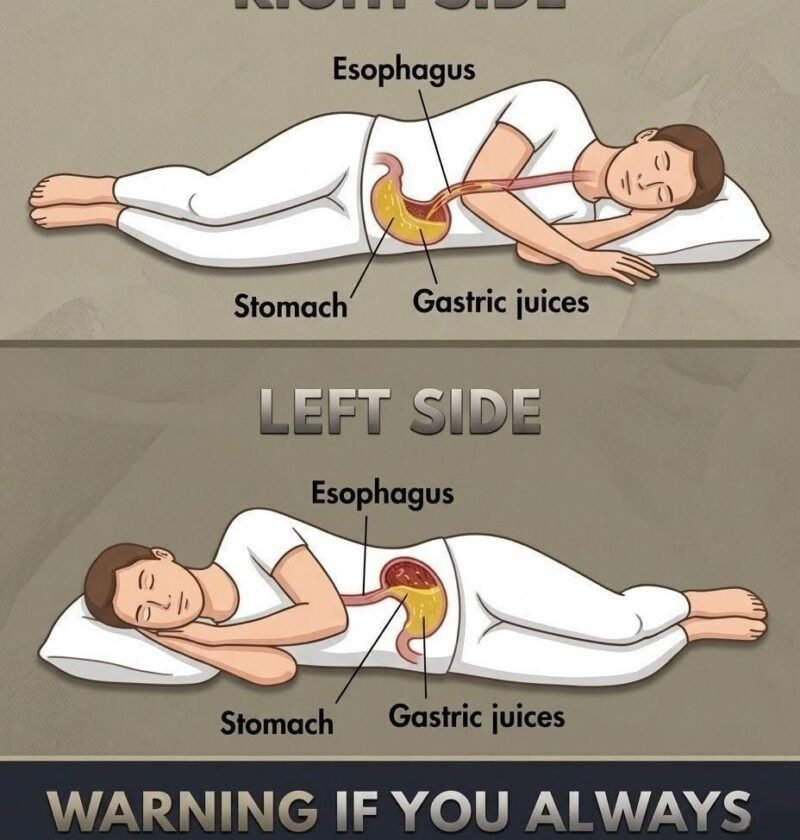
If you always sleep on your right side, you should ensure your setup provides the right ergonomic support to prevent morning aches and pains. Specifically, you should have:
* **A pillow between your knees:** This keeps your pelvis and hips aligned, preventing your top leg from pulling your spine out of alignment and reducing lower back strain.
* **A supportive, medium-to-firm pillow for your head:** Side sleeping leaves a gap between your mattress and your head/neck. Your pillow should fill that gap completely so your neck stays neutral and aligned with your spine (neither tilting down nor jammed upward).
* **A mattress with enough contouring/pressure relief:** Side sleepers place a lot of concentrated body weight onto a small surface area (the shoulder and hip). A mattress that is too firm can cause shoulder and hip pain, while one that is too soft will cause your spine to sag.
### Health & Comfort Considerations for Right-Side Sleepers:
* **Acid Reflux/Heartburn:** Unlike sleeping on your left side (which keeps the junction between your stomach and esophagus above the acid line), right-side sleeping can sometimes relax the lower esophageal sphincter and trigger or worsen heartburn. If you suffer from GERD, you may want to elevate your upper body or consider shifting sides.
* **Heart Conditions:** Some people with certain heart conditions find right-side sleeping more comfortable because it avoids the sensation of the heart shifting or pressing against the chest wall.
* **Pregnancy:** While side-sleeping is generally encouraged during pregnancy, doctors typically recommend the **left** side because it improves blood circulation to the fetus and prevents the growing uterus from pressing on major blood vessels.
Are you experiencing any specific discomfort or looking into right-side sleeping for a particular health reason?